Inanity

Standard

Sometimes the reasons we give people to buy are inane.

Inane as in lacking sense or silly as dictionary.com would define the word.

Here is my most recent TV commercial favorite.   It’s the garage door that still works (praise the almighty) when you lose power at your house.   This 30 second inanity begins as the fearful family pulls in the home to discover that there is no power to the house but Holy Driveways Batman, the garage door still opens!  We are saved!  

 Are you kidding me?   A) How often do you lose power and B) are you not capable of getting out of the car and using your key to the front door?  So silly.  The scary part is that some bright marketing agency felt that a garage door that works when you lose power is the key selling feature and that it should be the central part of a 30 second television ad, i.e. the reason buy.  

That’s inane.

If inanity lives in prime time advertising it may still exist closer to home.  So let’s make sure in the B2B world we don’t have any inane reasons for someone to buy hanging out there.    Let’s make sure we don’t have reasons that lack sense or are downright silly. 

I doubt these inanities still exist around here but just in case;

You should buy because I’m your account manager.   I remember a time when folks would believe that and even say that.  That having someone “assigned” to a client to be “account managed” was gloriously stupendous all by itself.   Many a sales rep used to think (I hope) that since the customer has “me” as an account manager well that would…um….be a darn good reason to buy.   A classic sign if you or your company still possesses this kind of inanity is if you get upset, hurt or worried when a customer chooses to buy a product some other way like going online or by calling someone else at your company.  

You should buy because We’re the cheapest.  This is B2B folks; cheap is cheap.   70% off, 60% off or”I can beat everyone’s price” gets you less and less today in the sales game.  You might actually do better by raising your prices; it can reflect your investment in services/ product and impart more literal or perceived value to a client.  Cheap makes you look cheap.  Cheap undervalues what your product does.  Cheap is something to avoid, not embrace.   Very few can pull of cheap as a reason to buy and those who do it well leverage far more than the low prices to retain and acquire customers.

You should buy because We have- “hours from 8am to 8pm 6 days a week”, “.. a 100% guarantee..”. “ …free shipping on..”, “..online ordering..”, “ ..a loyalty program for…”…etc…etc”.  These are pretty much Table Stakes folks;  that is to say that  everybody has these and simply needs to have them to get a chance to even play at the table.    And frankly, one of these alone or even all of them together is not a killer reason to buy.   Conversely, and somewhat unfairly, not having these can be a reason not to buy from you.   

So let’s take a lesson from our colossally idiotic consumer group that is dumbfounded by what to do when the power goes out and they are caught outside with just a garage door remote control.    Our business clients aren’t like that; they carry a bunch of keys to get where they need to go and they’ll need a lot more from you before they look to you for help.


Till next time,

Grow The Business

Mark

A Card

Standard

She looked at the envelope and didn’t know quite what to think.   She didn’t expect anything from him and hadn’t for a long time.   He had drifted away it seemed, they hardly ever talked yet she still felt loyal to him.

So she opened the card.

**

Dear Erin,

I wasn’t sure given all that was going on that you’d stay with me.   But I am so happy that you did. 

We have shared much over the years but I know I’ve taken you for granted.   I know I just expected you to always be there.   I know I just assumed you would never leave me. 

And you didn’t.   For that I am so grateful.

When we hit that rough patch last year I got scared.  I’m still a little scared.  I realize I had gotten careless around you and around others in my family.   You Erin, were there for me in the beginning when I was young and just starting out and I think I forgot that.

This note is very important to me because you are important to me. 

This note says “thank you” for being there then and being there now.  This note embodies that adage “Make new friends but keep the old, for one is silver, the other gold”.

Erin, thank you for sticking with me.  Thank you for keeping me close.  This note says I won’t forget that ever again. 

Thank you for your business,

Steve

**

Surprised?  Unfortunately, most of us reading this probably are. 

But Erin is not a lot different from many customers who have been with you for a few years. She’s likely similar to customers you have or maybe your business has, that despite the fiscal challenges, the new competitors she could choose from, and maybe even absorbing your price increases, has chosen to quietly stick with you.

Would a business owner write a note or have a card ultra personalized like in the above example for Erin?  Sure, why not?  Maybe not as much as written above (but I wouldn’t besmirch anyone who wanted to write a card for their top 10- 100 customers like above- well worth it!)  The point is that a card done right can be a very special message to a customer, one that can make them feel cherished.

A well done card maybe for Thanksgiving, or Christmas, or for any Holiday can mean so much more than a mere ”thanks”.   Heck, a simple “thank you” note done right can mean something quite wonderful.

And it should.   

It’s time to start planning about how you’ll acknowledge your clients. 

Do it better this year.

Till next time,

Grow The Business.

Mark

Dear Business Owner

Standard

Dear business owner,

It’s sketchy out there.

But you know that.  It’s been like this for a couple of years.  In my job, I get asked for advice about the marketplace and about business and about turning things around.    

Hope it’s OK I’m going to share my advice with all of you now.  The advice is real good I promise.

  • When you own a business today, taking a lot of risks probably feels crazier than ever.  Except that it’s not.  Risk taking right now is what you have to do if you want your business to survive and thrive.  It is riskier right now not to do anything or to just do what you always did.


  • When you own a business today, you have to step out.  Be noticed.  Look for new ways, not old ways, to sell your products and to get and keep customers.  The rules have already changed.  The basics you might think you should fall back on: the “tried and true” so to speak, are pretty much the “tried and failed”.  They don’t work anymore.


  • When you own a business today, you have to be indispensable to those who pay you. You have to add value and be a difference maker.  There is no “under the radar” anymore or just trying to keep on keeping on.  You must get on the radar.  


  • When you own a business today, even the “givens” don’t seem to be as reliable anymore. Sales are off.    Everyone is judging you no matter how long you’ve been at this game in this tough economy.    Seems like the “business” has to be earned all over again and again.  Everyone is watching you and all your touch points need to have a “wow” factor. 


  • When you own a business today, it’s clearer that innovation and creativity is going to rule the day.  Getting out there and doing that and actually investing in yourself, changing and updating your image and your brand, that’s going to take some serious work.  You better start now.


Of course, even if you don’t own a literal business; you actually do.

That business is you.

You are president and CEO of You Corp and quite frankly, the advice above is as much for you and me the individual, as it is for any traditional business right now.

Have at it. 
Till next time,


Grow The Business.

Mark

So Misunderstood

Standard

Some sales people, when they hear my name, turn their heads away and shrug.

Some sales people, when they hear my name, feel insulted.

Some sales people, when they hear my name, get very angry.

It’s too bad really.

Some sales people, when they hear my name, just don’t get it.   I am so misunderstood.

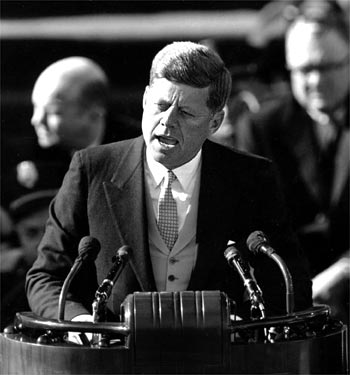
Because without me, some of the greatest sales people in the leadership world would just about be forgotten.   Without me, you’d not remember half the moving messages of an Obama  or  Reagan or the stirring words of Martin Luther King on the steps of the Lincoln Memorial, or the timeless candor of JFK at his Inauguration.   

Without me, some of the greatest sales people in the traditional selling world would just about be lost in the crowd.  Without me, you’d not have heard half the messages of Tony Robbins, Zig Ziglar or Jeffery Gitomer.

Without me, some of the greatest sales performances around us would just be of the ”Oh So Average” variety.  That guy in Florida, the one that landed the fortune 100 company, that would have been different.  That appointment setting guru, she wouldn’t get half the meetings set up with decision makers she does today without me.   

My name is Scripting.  And I am so misunderstood.

I am not overstating this.  Barack, Ronnie, Martin and John performed crafted messages.  They worked from scripts.  They had visions and dreams and goals to sell.   They followed that script; they wanted to; they needed to.

There is an unwarranted aversion some sales people and sales leaders have to being handed a script. 

You have to remember that a script is content crafted in such a way that a message is superbly told, a vision is passionately stated, or an experience is exquisitely orchestrated

No one who hands you a script is trying to script tone, genuineness, sincerity, passion and excitement.  You own that.  

No one who hands you a script is trying to “de humanize” you or the experience.  It’s the opposite.  That script, that process, that well crafted content is there to allow you to maximize your talents making the experience sound nothing like a script.   Learn from the masters and make the script invisible; that is what you own.   

The great sales people of the world, the industry or even in the building you work in wouldn’t dream of “winging it” or thriving off of improvisation; it just doesn’t work. 

Till next time,

Grow The Business.

Mark

From The Red Book

Standard


I carry a little red book around with me.  I write things in there that I like, I hate, I worry about or get excited about.  I bet you all have a little book or notepad too.

I looked through it over the weekend.   These strike me as things I want to write more about, support or rail against, or just plain share and do something more with. 

How about you?

  • I hate that human condition that drives online business reviews. Have a problem and you rant online no matter how little the issue.  Skews everything. Totally unfair.


  • I doesn’t matter much if you have the newest tools or software on your desk (like a new CRM for example) if you have no desire to change your routine or results to begin with. 


  • Listening is cool.  But If you can’t get your client to talk to you, what the heck is there to listen to?


  • Coaching is hard.  Coaching to stats, processes and order entry is easy vs. coaching to communication, selling and service skills.  That latter will grow the business and former will give you the chance to do it.   


  • It’s only a matter of time before what’s credible on the internet matters more than that something is in fact, on the internet.  And that time is very soon.


  • Twitter, Facebook, LinkedIN and all the rest haven’t changed us.  We have always loved, and needed a network of engaged, trusted friends and colleagues.   That need has always been there; it’s the tools that keep changing.


  • Glen Garry Glen Ross is simply the greatest sales movie ever and is Jack Lemmon’s best performance. The language is rough but the Mamet writing is priceless.


  • Ever notice on Mad Men how they have to sit the prospects down in the 60’s and explain in detail what marketing and advertising is in order to sell it?  Well we gotta do the same thing somehow these days when we sell online marketing.  It’s still kinda foreign to people.


  • Service Reps have the most satisfying job in the world.  You pros here know what I am talking about.


  • Open ended questions are so overrated unless you have some trust established; otherwise it’s just offensive. 


  • Adult learning theory continues to be disproved over and over again as weak.  It’s about “what” is being trained that matters, not the learning “style” of folks. ( Just as I suspected :))


Till next time,

Grow The Business.

Mark

Kill all Leads, Commissions and Sales Reps

Standard

I’m done with these three.

You should be too.  It’s tough because I worked them, fed my family with them and have been one for a lot of my life.

But I don’t believe anymore in what we call these three.

We need to change the names of these things.   It would do us wonders on so many levels.   Bad names can hurt what people think about you.  Bad names can hurt what you think about yourself.

And I’m done with that.

**

Leads.  Ugh.  Please, this is word is the worst offender.  “Give me the leads”.  “The leads stink”.  “I need more leads”.  The word “leads” just reeks of a faceless commodity. 

Change the word to “Needs”.  Every lead is really a person or people with a need.  And every Need has a solution or a way it can be filled.  A Need is customer focused.  A Need is something to rally around.  A Lead on the other hand, is blah.  A Lead is for us.  And “us” should not be the focus.

Think of what would change and how we might feel or do differently if:

Leadflow becomes Needflow. Lead Management becomes Need Management. Lead Generation becomes Need Generation.  Isn’t that better?

Commission. An ugly heinous word in sales don’t you think?  A word so commonly hated that many companies go out of their way to advertise that their sales pros are not paid on something so ghastly as to be called “commission”. 

Let the Commission Plan become a Mission Plan that “rewards” behaviors and results.  “Commission” the word, disappears and “Rewards” becomes the lead story.  “Rewards Pay” details not what portion of a sale price goes to a rep but what portion is added to the reps pay as a reward for behavior or results. Semantics?  Yes, my point exactly.

“Rewards” the word doesn’t sound like a “take” or “cut” or an “added cost” to a client ( or to the sales rep).   Rewards are awarded by the boss or the company for a mission accomplished well.

Think of what would change and how we might feel or do differently if:

Commission payout becomes Rewards payout. Higher Commissions become Higher Rewards. I work on Commission becomes I work on Rewards.  Client Commissions become Client Rewards.  Isn’t that better?

Sales Rep:  Ah….. the almighty fearful title.  For at least 60 years people have tried variations to hide or mask or those two words.  Nobody it seems wants to be called a Sales Rep.  No doubt you’ve heard or have been an “Account Executive” or a “Territory Manager” or a “Sr. Business Development Mgr” and on and on….. all the while being um…..well, a Sales Rep.

Truth is, the name “Sales Rep” sucks.  It has always sucked.

It’s not customer focused, it’s company focused.  It’s not broad sounding, it’s narrow sounding.  It’s got one of the most stereotyped images around of greed, neglect and selfishness.

The new name is simple. 

Help Rep.

Help.  It’s what any true sales rep really does anyway.  Help fill a need.  Help fix a problem.  Help make something better. Help you feel happy or organized or in control.  Help you grow your business. Help you run your business.  

Think of what would change and how we might feel or do differently if:

You walk into a Macy’s store and you talk to a Macy’s Help Rep, or walk on a car lot and talk to at Toyota Help Rep, or call Deluxe Corp and get a Deluxe Help Rep.

Maybe all the Help Reps fly in for a big Help Conference in Chicago called the Big Help.   Maybe there Help Contests for the Help Reps.  Maybe you get better and better at Helping vs. better and better at Selling. 

**

Pretty simple stuff these changes are to make.  And if we just do it I swear we could change a little bit of the world.

Till next time,

Grow The Business.

Mark

Ugh! The World Cup Soccer Sales Approach

Standard

I figured out why some of our sales efforts don’t work so well.   We sometimes use the World Cup Soccer Sales Approach.  

I tried watching the World Cup over the weekend.  I did.  I watched England vs. USA and Germany vs. Australia.    I was annoyed, confused and bored.    I walked away.  

Thankfully those 5 hours I wasted made me realize that the World Cup Soccer Sales Approach is dangerous.  Use it on prospects and customers and they too will become annoyed, confused, bored and walk away.   

In order to see if you suffer from using the WCSS approach let’s take a look at the nasty 3 step problem that is World Cup Soccer and its sales counterparts.

Step 1Annoy Your Audience.  The trumpets have got to go.  That incessant drone (and it really does sound like angry bees) is all that you hear.  It borders on inane.   This is white noise of the worst kind; white noise that is too loud and won’t go away.   White noise like this can be damaging to sales especially when we cold call (or warm call) customers or prospects poorly.   For those 10, 30 or 120 seconds of you spouting your benefits, or “our possible fit” and other drivel like “I can save you time and money” these folks hear blaring in ear and brain self talk like “How do I get rid of you!”, “Can I just hang up???…” I have got real work to do!!.   Annoying white noise is a big deal especially when practicing interruption marketing or sales.

Step 2 : Confuse Your Audience:   I’m not following what these guys are doing with the ball.  Moving forward, passing backward 3 times, moving forward, and passing backward again and again.  And offsides?; impossible to figure out even in replay.    How often does your client or prospect get bounced or passed around to someone and they don’t understand why either?  How often, just when your client thinks they are moving ahead, does she have to tell her story repeatedly to customer service, technical support, an account manager or in chat?  Confusion causes tension and tension stops sales.

Step 3:  Bore Your Audience:   This is the worst because if you can somehow get past the trumpet blaring white noise and figure out the confusing way to work with your business then it all goes for naught if you are downright boring.  I heard a joke over the weekend that that soccer call “gooooooooaaaaaaaaaaallllllll!!!” is really an alarm clock for the sound asleep American on the couch.  My wife was sound asleep watching soccer with me (her last utterance something like.. “nothing is…happening…” ).  And while the commentators never yelled “goal” like in the joke to wake her, the point is not lost.  Boring does not sell.   If your business is unremarkable (especially after that first sale) then your clients and prospects will walk away.   

Till next time,

Grow The Business.

Mark

Interrogation Is Not A Sales Strategy

Standard


You do it all the time.

When online, if you make me fill out anything more than my name and email address just so I can just learn more about your company or your product; then you believe that interrogation is a sales strategy.    And I will summarily go sign up for somebody else’s Webinar at their website and grow their business instead of yours.

When at the do it yourself superstor you ask me (after I politely ask you where something is…) questions like “If you were going to remodel your garage or your kitchen, which one would it be?” and without even taking another breath add, “And if it was the kitchen, would you have to move the stove or the sink?”; then you believe that interrogation is a sales strategy.    And the next time, when I need drywall screws or darned near anything else, I will go somewhere else. (His name was Steve and I kind of feel bad he was trained like that- seemed like a nice kid.)

When I call to order more business cards and you pepper me with six questions about my small business without so much as offering an ounce of proof that you even understand small business; then you believe that interrogation is a sales strategy.    And I will not buy another product from you.

Interrogation can be many things, but it is decidedly not,  a sales strategy.

Quit it.

Till next time,

Grow The Business.

Mark

You Don’t Know, Jack

Standard

“Well Jack, that may be real, but it sure as hell isn’t interesting.”

Interesting how an insult Jack Nicholson received over 40 years ago is so relevant today.  The insult was one he deemed the best piece of advice he’d ever gotten. (See extras in The Shining DVD at Netflix)

I think it is great advice for us too.

The “insult turned advice” as Jack puts it, came from a film director back in the 60’s after reviewing Dailies in which Jack (like many actors of the period), performed scenes with great effort on being as “real” as possible on screen.  Hey, it was the 60’s and “being real” was where it was at. 

“Well Jack, that may be real, but it sure as hell isn’t interesting”

If you are in sales or marketing (and the reality is, we all are), this advice is perfect and a little more of what we need these days.    You can be “real” all you want with customers/prospects; stay the course, keep the message clear and lay out the values.  You can even do it like you’ve never done it before using YouTube or Twitter or WebEx or whatever, but truth is since everyone else is doing it that way, and you are largely just changing your mediums,  that may be just a different kind of real.

 And while that might be a different real, it sure as hell isn’t interesting.

And that’s a problem.  With all the clutter and all the short attention spans and all the competition, we should worry a lot less about being real, and start to get more interesting.

When you are selling for real, skip the “real”.  Sell with a story.  Sure, you can lay out the benefits of your product, it’s solving a problem or driving more clicks, or how that new logo can create a lasting impression with a prospect, or you can be interesting and start a “mental movie” in the customer’s mind by saying the same thing but with a story.    A story about the prospect that followed the van with the super cool new logo just to see where the business was who owned it, is way more interesting than the customer focus group data about changing a logo.  The stories are out there, and they are compelling.

When you are selling for real, skip the “real”.  Sell with emotion.  Nicholson learned “real” doesn’t work on the big screen, but ‘interesting” does.  Make a big deal with whatever it is you are selling and let’s hear the passion in your voice or on your video.  Let’s hear the energy about your 5 favorite products as you describe them to your client in breathless, halting, excited tones.   Go big with emotion and storytelling when selling, it intrigues and it works.

Assume that camera is filming live as you converse with your client or your media is making its first impression.   Your audience is critiquing you. 

Don’t be real.  Be interesting.

Till next time,

Grow The Business.

Mark

Are You Smarter Than Your Website?

Standard

I hope so. 

I’d like to think most people are smarter than their website and quite frankly, realize they need to get even smarter.  

In a cluttered marketplace, Sales people, Service people and anyone who actually talks to customers must become the Differentiator, the Linchpin, the Trust Agent, the Service Ninja etc. etc.  to stand out from the competition.  

Before more smartness can happen, we have to make sure we are at least not dumber than our own websites.

Here’s 5 ways you can tell.

  1. If your website gives testimonials of how products helped solve a problem, grew top line revenue or saved costs, and you don’t; your website is smarter.
  2. If your website recommends a new product based on the current purchase leveraging what “other like customers buy” (like most websites do), and you don’t; your website is smarter.
  3. If your website doesn’t require a prospect to give more than a name and an email address before it sends out more information, and you do; then your website is smarter.
  4. If your website allows a customer to quickly start an order, stop midstream and check out something else, then go back to the order, and you don’t, then your website is smarter.
  5. If your website shows smiling, enthusiastic and happy people on every page, and you’re not; your website is smarter.


If you missed even one of these, start studying hard, maybe even get a tutor; expectations of you are high my friend.

Till next time,

Grow The Business.

Mark