
A New Sales Model

Standard

Have a new sales model for you.  Don’t fall asleep just yet, you should care about this.  It’s simple but different.   Different is good.  

A sales model for our purposes here is the process or the steps you take to make a sale.   The process you trust, the process you live by.   Sales models are important; they are a roadmap so to speak, of how to do what you want to do, which is of course, to grow the business.  

You use sales models all the time.  Want to go out on a date with someone?  Here is an age old popular model to get that done.

Prepare / Search / Impress / Close

First you go and Prepare (look sharp, take a shower that day (you can do it!) then go Search ( scope out the lounge, the beach, the bake sale – whatever) then Impress ( sound wicked funny/ smart/ nice and get your favorite pick up lines ready like “Excuse me do you have a tissue? I was just listening to Susan Boyle on my IPod“) and finally the Close (“I have a hankering to watch The Notebook again, would you like to join me?”)

Traditional Sales models have been around forever too.  A typical sales model is something like:

Rapport /Discovery / Present / Close.

That is to develop a connection, ask good questions, make a product offer and then close the sale.  You get it. 

I don’t much like the traditional sales models.  Not for us.  Not for anyone really, but especially not for us. 

Here is a new sales model

Time / Trust / Create Need / Discover / Advocate / Close / Support 

Looks complicated?  It’s not.  Don’t worry about the last 4 here (discovery, advocate, close, support), those are traditional and something to detail another day.  Just think about the first 3; Time, Trust & Create Need, those are the “New” in this sales model versus traditional ones.  

The New Sales Model is front loaded like never before.  It needs to be. 

The very beginning of any sales process has been underwritten and underplayed for 50 years.  Getting attention, earning the right to talk with or market to folks wasn’t like then what it is today.  It’s different now; how you really start or really begin is the most important part of the sales process.  Do that well, superbly well and the rest of the sales process is easy.   That’s why we need to change the traditional model.

Dig up any sales training or sales models from today or yesteryear and you’ll find almost nothing on getting salespeople to see TIME as a critical commodity that must be purchased from the prospect before anything happens.

Search Google and look for all the TRUST training and theory out there for sales forces of the world; you’ll find some for sure, but mostly you’ll find a lot of superficial blather about “building rapport” or “forming relationships”.  Used to be a hearty handshake or some smart product knowledge or “my office is down the street” was trust enough to get the sales process started.  No more.  Nobody’s company has that kind of infallibility anymore.   It’s take a lot more and a lot different now to earn the Trust you need today.

Instead of CREATE NEED help, you’ll find a gazillion sales theories and courseware around “finding needs” or “finding pain points”.  It’s as if the prospects and customers of the world are walking about “injured”, “lost” or “clueless” about themselves anxiously waiting for a company or sales rep to come in diagnose and prescribe medication to fix the pain.   I don’t think so. 

Sales Theory in large part is not keeping up with the times.    Much else is different in the marketplace than when some of the biggies rolled out their iconic sales models (companies like Wilson Learning, Dale Carnegie, Huthwaite and the like).  What’s changed?

    Everybody has gotten smarter; your customers in a couple of clicks can get a lot more info and now need a sales rep to be smarter than them in different places, in more Trusted places.

    It’s harder to be unique.  Companies are changing and entering new spaces but consumers still have lots of choices (more than ever) for a provider.  It’s like Malcolm Gladwell in his book Blink who said essentially that “if given too many choices, then nothing happens”.   Create Need my friends.

    Used to be you could be assured your customer “listened” to you, now they are in control.  Their Time and attention is precious and they know it- YOU know it.   Marketing is changing radically to respect this; Salespeople need to too.

This model is your map to better success.    This model needs our attention, our rallying around, our design and planning around.

Old sales models are for old companies and old sales reps in old marketplaces.   Don’t believe for a minute we are old.  Nope, we’re new, brand new.   We have to be. 

Till next time,

Grow The Business.

Mark

Want more fodder for thinking about the new model?   Take note..

  • Seth Godin gets totally the “time” piece of the model; so read his book Permission Marketing
  • Gitomer and Steven Covey Jr. (the son, not that father) get the “trust” piece fairly well so have a gander at Trust by Gitomer and Speed of Trust by Covey Jr. 
  • Lastly go here  http://www.icrinc.com/web/videoportfolio.php  Scroll down to Easton Bell Sports who essentially base their sales philosophy on “creating need”.  Love it 

Forest Quandaries

Standard

“If a tree falls in the forest and there is no one there to hear it, does it really make a sound?”

I get the riddle, I really do.  But I honestly don’t care much about the darned tree and if it makes even so much as a peep.

I do have some things in that forest I do care about though.  You should too. 

  • If you completely rebrand yourself but there is no one there to notice, does it really make a difference?  Think hard about inviting more people into the forest.


  • If you spend hours learning about a product but no customer ever asks you a question about it, will you ever sell anything? Grab some stump and tell somebody what you know in an interesting way.  


  • If you spend time to get smarter or stronger but never feel a bit stretched or sore, will you ever be either smarter or stronger?  Lift some heavier deadwood.


  • If you want to live in the best tree in the forest but never have a plan to find it, will you ever be so lucky to stumble upon it?  Get a knife and carve out a plan.


  • If you post a blog in the forest and there is no one there to read it, does it really matter?  Write something so interesting that people care to hike in once in a while. 


Till next time,

Grow The Business.

Mark

Mullet Over

Standard

mark mullet years

Sales and Dating just don’t mix.  But when they do, there are lessons to be learned.

Tonight you are super sales guy Rock Ledger.  You are single and in a bar.  Good Times.

And lucky you, it’s also 80’s night.  This feels good.  This was your time.  This was where the Rock Ledger legend began.  So even though you are not much of a dancer, it’s flashback (and Flashdance) fever tonight so you have got it going on!

You Rock Ledger, you super sales man, you  did your pre – party research, and prepared well for this 80’s night.   And holy leg warmers, you spy someone you think you’d like to talk to.  You remember her name is Tiffany.

Excellent.   Time to make your move.

A bit sweaty now because you just had to break out some moves to the blaring tune Safety Dance, you are comforted knowing that the rusty Aquanet hairspray you found buried in your dresser drawer (literally from the 80’s you suspect), had enough juice to keep hair  securely shaped into that “oh so cool” Mullet.  You amble over to Tiffany in your now ill – fitting Members Only jacket and say:

“Well Hello there.” 

“Well Hello to you.”  She says.  She looks at you coyly.  She’s curious.  You look back.   An awkward pause ensues, but you are ready.  Conversation is your game.

“I was wondering” you say, (knowing full well how good your John Stamos Full House Mullet looks)….  “Are you happy with growth of your family or are you just looking to keep the family you have?”

 “Whaaaat?” She cries.

 “No, I ‘m sorry.  What I meant was, how happy are you recently with things?  Is life going well for you?  Are you really happy with your current boyfriend or do you want to be happier?”

“Listen Skippy, I barely know you..”, she says. (And of course you’re thinking that “Skippy” was Michael J Fox’s dorky friend on Family Ties and you definitely do not, look like Skippy)

“Ok I’m really sorry this is not starting off well.  All I want to know is why can’t I have a serious conversation with you?”

WHAP!! Your face, ego and hair sprayed Mullet all get whacked at once.  Face and ego bruised, the Mullet surrenders too and snaps back from whence it came.  Your 80’s night is now over.

**

Mildly entertaining?  Sure.   But Rock Ledger’s conversation with Tiffany is not that much different than some of the early conversations we have with our business customers and prospects.  Though we are well intentioned, many of us launch into some very deep questions right off the get go.

We are quick to ask these deep and frankly quite “personal” (especially when speaking with small to med size businesses) questions that while your customer won’t likely literally “slap” you like Tiffany did, they sure as hell might want to.

Think about what many of us ask after a few moments of introduction or in our first meeting.

  • “Are you focused on growth or maintaining your customer base?
  •  “How is the economy treating you, are you guys doing OK?”
  •  “Are you happy with your current supplier?
  •  “What’s the biggest challenge you are facing this year?
  •   “I want to understand your needs better, so I have some  questions..”

Should we be asking these questions of our customers?  Yes we should.  But should we take some time to buy the prospect a metaphorical drink or two and build a little trust and value about ourselves or our company first?  Prove we care about really helping the prospect first?   You bet.  Tiffany would have appreciated it.

This doesn’t have to take too long.  It can take as little as a first date but more often than not (especially today in this low trust competitive environment), you shouldn’t ask these types of “personal questions” till you’ve had a few dates or you might get whapped.  It’s tough, the pressure is on.  You need to perform.  Rock Ledger wants to close the deals right quick too, but you saw what happened to him.

You can dance if you want to.   And I suggest you do.  But dance the long dance version please first.

Till next time,

Grow the Business.

Mark

What’s Your Trigger?

Standard

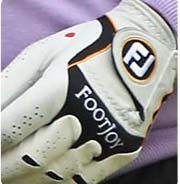
Louis Oosthuizen won the British Open Sunday.   And a little sharpied red dot on his golf glove had something to do with it.

That little red dot on his hand was what he looked at before each and every shot.  That glance, that focus on the red dot helped get him “into the zone” and to “dispel the distractions”.   It was and is his trigger.

  Triggers, as any sports person knows, are a big deal.   They can be a stare, a move, or even a thought but regardless of what they are, it is what they do that matters.   And for Louis, that trigger was something that helped him execute in a very tough job under a ton of pressure.

What’s your trigger?

Playing sports, mine was a tap of my left foot before the pitcher began his wind up.  My younger brother (a much better player) would slam his bat to the plate at the beginning of each at bat; a trigger that worked for well for him (and as an added plus, intimidated the opposition). 

But what’s your trigger at work?  We do great things.  We need to perform under pressure and just like Louis we’ve got to execute difficult tasks well (often repeatedly) without much room for error.

For some folks it’s a phrase or a word they say to themselves before the presentation starts, before the call comes in, or before they push that door open that says “no solicitors”.  For other folks it’s forcing that image of a mentor or a respected boss into your head, or it’s a quick look at your kid’s picture on your desk and the thought of who you are really doing this for.

But more often than not, I’m guessing there isn’t a trigger at all.

More often we just do.  We think hard and we work hard for sure, but I doubt many of us consciously while at work have a “trigger” that helps us get “into the zone” or “dispel the distractions”.  

I think we should find one.  One that helps you instantly lock into that zone.   Maybe it’s a head nod with your eyes closed for half a second as you hear the words or see the face that is your trigger.  Maybe it’s something you wear on your wrist you can cast a glance at 15 times a day. 

I have one.   I have a trigger.  I’ll admit I’ve gotten away from using as often as I once did but Louis inspired me to bring it back.  And yesterday (Monday) was the first day I employed it throughout the day in a quite a while. 

Grew the damn business I did.

Till next time,

Grow The Business.

Mark

These Bags Should Not Fly Free

Standard

The airlines have a message for you.  Just leave your bags at home or you’re going to feel some pain.  And I think they got this one right.  Maybe we should start charging for bringing bags to work.

Better still, here are 5 bags Sales and Marketing Leaders should just leave at home.

  1. The bag of Costumes:  Too often sales and marketing leaders cover themselves with consultants or brand names to hide inadequacies or lack of confidence.  Work hard on finding the right answers, not buying them and then hiding behind them.
  2. The bag of Old Shoes:  Sorry, but your experience in closing techniques or dealing with objections is pretty worthless today. It’s the beginning of the sales process that is woefully under focused on today.   Leave that 80’s leather at home.
  3. The bag of “Best Employee / Best Practices” Manuals:   Problem with this belief is that the best employees of today are often great at Interruption Selling or Interruption Marketing which will be dead in about 5 years.  Bury that in the yard.
  4. The bag of Infinite Prospects:  The world is smaller now and if you try to bring the bag of dreams that there are thousands or millions of untouched virgin prospects; you’re wrong.  Pay your $25 dollars and bring the bag of Investing Differently in Current Customers.
  5. The bag that Won’t Fit:  You might be brilliant, you might be the answer.  But if you never take a moment to embrace a culture, a department, a division or a team ( even for just a few weeks),  before you try and change it, you’ll never quite fit.


Till next time,

Grow The Business.

Mark

Easy Still Needs To Get Easier

Standard

Fax machines ain’t dead yet.   Especially in small businesses.  But of course it’s not the machine itself that matters; it’s what it still does really well that does.   I got a neat lesson about that not long ago.  

Last month I had the luck of sharing lunch with one of our operations leaders while on a visit to our Canadian facility.    He had just conducted a tour of his area that morning and was animatedly recounting the response he gave to the question about why there is still a healthy volume of faxed orders from small businesses.

“Here’s why…” he said and deftly picked up an imaginary order form, proceeded to circle an imaginary box, write in an imaginary quantity and then stick it into an imaginary fax machine. Done.

Sweet.  Simple.  Quaint even.  So Easy.

And that is the point.   For a small business, it is easier (and sometimes a heck of a lot easier) to stick with the old than go with the new “Easier Ways”.

Let’s take an online reorder of a product.  Maybe it’s new name plates, or business cards or truck parts or whatever.   And think about the online ordering process experience from just about any company.

In this typical small business you’ve got to find a computer you can use to place this order (it’s not like everyone at a small business has one readily available)…. open up a Browser….find the Vendor…. get past the “Sell” area landing page and find the Existing Customer area (you know up at the top right somewhere…. in the tiny print)….. find that Sign in button….. Enter Email address…. Login name… remember or dig for, the darned Password….. Place the order…. Verify…. Validate…. etc etc.  Is it simple? Yes, for some.

But some find it “easier” to grab the reorder form that was mailed to them, circle a spot, write in the quantity and fax it. 

Others find it easier still, to remember nothing at all other than the bloody company name, pick up the phone, talk to a human and place a reorder.  

This isn’t a knock on web plays for small business; this is a reminder that “Making it Easier” is a critical factor for small businesses.  And always will be.

Warrilow (a leading researcher of small business) often reminds us that the majority of small businesses are not early adopters of technology but I’d contend that is as much about how easy (or not)  something new is to do versus how easy it is to do today as anything else- especially for small business.

So two easy questions to ask yourself when you are trying to provide support and solutions for your small business customer;

  • How can your recommendation “make things easier” than the current product and/or supplier in use today?  Write down those answers for your favorite products and embed them in your contacts and conversations.


  • Is the reason a SB won’t budge or buy really because the solution will require “more work” on the clients’ part than they do today? (Even if just in the transition?)  If yes, remove the work!   Invest in whatever it takes to do this; the return you get versus price obsession or proving ROI will be significant.


Till next time,

Grow The Business.

Mark

5 New Rules For Book Reading

Standard

After a recent conference meeting, I offered to send out a particular book to any sales leader who wanted one of my remaining stash.  Many folks replied requesting the book and my guess is that others used the link I provided to purchase the book at Amazon. 

Super.  I love people who read business books.  They get it.  

It was a little odd though.

Some sent notes saying things like “Please send the book and I’ll pass it on to each leader” or “I’ll send back it back when I am done with it”.  These notes are from people wanting to invest in themselves and are very well intentioned for sure.  I’m convinced though, that our “Library” experiences and our “Textbook” experiences in school have fostered the belief that all books should be treated as we once were instructed to, or as we might treat fiction books today; That books are to be read and read only; That books are to be passed around, or resold or covered in protective paper and never, ever to be written or doodled in.  

It’s time for the old rules to go.  I don’t think those beliefs suit us well when applied to essential books.  These types of books I’m talking about can change your life at work and at home.   

Here are 5 new rules to go by.

1) Never Share:

It’s yours.  You wanted this book to read.  You will, if you do it right, write in this book including in the Kindles of the world.  In a mad rush some day in the future, you’ll lunge for your bookcase because you know that there is this book or this author who has that idea  and you need to read it again to move this effort forward or make something happen.  Make sure that this book is in your bookcase or on your desk when you need it.  Recommend a book?  Yes.  Share a book?  Never. 

2) Never Borrow:

Never borrow one of these types of books from anyone.  Not your colleague, not your spouse, not your friend.  Borrow means you have to give it back.  Borrow is a complete waste of time.  Think you can read a non-fiction critical book and remember the 10 essential themes or tools it teaches?  If you can, welcome to the tiny percentage of folks with a photographic memory.  The rest of us need to skip the “borrow” approach to books.  Never borrow.  Leave that to the fiction and fun books. 


3) Always Write In and Highlight In Your Book:

Have a pencil and your favorite color highlighter in hand whenever your read one of these books.  If you are into the electronic readers be careful; you have to get the ones that easily allow you to write, highlight and retrieve (and Nook ain’t one of them).  Books are a collection of moments from great teachers, researchers and leaders and like anything else, offer some moments that are better and more striking than others.  Highlight them or write a note next to that moment.  Your books should be a complete mess of color and notes.  It makes it that much easier a year later or 10 years later, to pick up this book and find what you loved about it the first time you read it.


4) Spend Money:

Spend at least $60 of your own money every month on books.  About a $2 dollars a day on ways to be better, be happier, be smarter or be more of whatever it is you want to be.  You decide if you are worth it but if you are reading this, my guess is that you are.  


5) Re-Write the Best:

If you take the time to read these types of books (and you must), do so with a small notebook that you’ll never lose (I use a small red moleskin notebook).  When you read, there are concepts that on occasion will make your jaw drop, your eyes widen and your breath quicken as within this book and on this page, a brilliant perspective screams out to you.  These thoughts are so profound that a note or highlight just won’t do and in fact, you should carry it with you. Transfer that tremendous thought to your small notebook.  Carry it with you and look at it often. 

Till next time,

Grow The Business.

Mark

Drawn In

Standard

This post has little to do with work or self development or leadership.

Except, I think, that it does.  

******

Why am I so taken by this DVD?  It is nearly 6 full hours of the funeral proceedings for a recent US president.  And all of it draws me in.

I ran it across it a couple of weeks ago while at the Library and had a chance over vacation to watch it.  I spent nearly a day doing so; and don’t regret for a moment that I did.   The video is The Reagan Library’s Tribute to Ronald Reagan.

It’s not the man or the politics I am obsessed with.  That’s not what draws me in.

It’s the ballet and the precision of color guards that are so much the very essence of these services that draw me in.   Even more, it is that beautiful precision interspersed with tightly controlled emotion and tears. That draws me in even further.

It’s the stirring poignant music of choirs and soloists and military bands that draws me in.   Even more, it is that all of that music is juxtaposed amongst non-melodic sounds like the 21 gun salute and cannon fire.  That draws me in even further.

It’s the speeches from heads of states, childhood friends and former presidents that draw me in.  Even more, it is that some of those speeches written with the help of aides and speechwriters while others were seemingly written on a blank sheet of paper the night before.  That draws me in even further.

It’s the thousands of people lining the streets watching the procession of family behind the horse drawn carriage that draws me in.  Even more, it is that you oddly cannot hear a single sound except footsteps and birds chirping as those thousands of people stand in complete silence. That draws me in even further.

I know what it is.   I know why I am so drawn in. 

There is no middle ground here.  It is a palette of only the brightest and the darkest colors standing apart at times, and then, mixing together. 

It’s a place where not only you may cry tears of joy or tears of pain, but you may actually cry both.   There is no middle ground. 

I’m drawn in when you have to invest and where there are, extremes.  The highs and lows in people, places, history and work I think, make it all worth it.  And when these extremes are inexorably tied together, I can’t turn away.

Till next time,

Grow The Business.

Mark

Quit Worrying About Sales

Standard

Quit worrying about making sales, sales people.

Quit worrying about the sales results, marketing people.

Quit worrying about sales performance at all, leaders of any type.

Just stop.   

Sales are not the issue here.  Meaningful Conversations are the issue.  We don’t have enough of them.

  • Worry more about that in the 81 customers you spoke with today, you only had 9 meaningful conversations; conversations about helping them solve a problem or to make things better or something.  Move that meaningful conversation number to 19 a day and more sales will follow.
  • Worry more about the 43  Voicemail messages you leave everyday and that maybe just 3 customers on average ever returns your darn call.   Work on making those voicemails more compelling and interesting and get those returned calls to 10 and more sales will follow. 
  • Worry more about how to entice a customer to hear (just hear! not buy anything) about how your company is different or better or smarter than the competition.  Worry about that and worry hard, and more sales will follow.
  • Worry more about how and which ways to get meaningful conversations going customers than worrying about all the tracking sheets, the coaching conversations, the sales huddles, the campaigns, the contact plans and the emails largely focused on you and “where you are with the numbers” and “where you need to be”.  Instead of worrying about the what, worry about the how and sales will follow.
  • Worry more about fixing “the wrong problem” for if you do fix it –  it is the absolute worst thing any person or organization can do.  Fixing the wrong problem ( “I need sales!”) results in sales that cancel in a month and litter the prospecting landscape with your bad name and arm twisting tactics.   Sales is the “wrong problem” to worry about people, it really is.  

Meaningful Conversations on the contrary, are well worth your worry and mine.  

Till next time,

Grow The Business.

Mark

Treat Your Boss Well

Standard

Treat your boss well.  It’s always the other way around, isn’t it?

Kevin Spacey had it rough as the sales boss in Glengarry Glen Ross.  Lots of bosses have it rough.

And I’ve yet to see a book on the shelves, or in a training class, or a webinar,  or darn near even a memo with topics like “How to Treat Your Boss Better” or “Strategies to Engage Your Manager” or “Connecting With Supervision: Unleash The Power”

Nope.  It’s all about what the bosses should do for their employees.  How to be a better manager, coach, teacher, helper or leader of people.

I got it already.

We have to turn the tables.  We’re missing chances to make this third of our lives that is work, just a little bit better.

  • Treat your boss as if you know they once “carried the bag” and like you, had some rough sales quotas to hit, impossible project deadlines to meet or tough service issues to handle.  They had those then and unless I’m missing something, still have them today.
  • Treat your boss as if you know they have a hard time sleeping some nights worried about you or your colleagues, or the business, or even the systems.  Truth is, the lack of sleep isn’t always because they were out too late the night before.
  • Treat your boss as if you know that being a leader or a coach of people (and some bosses in this sales business have 20 + direct reports) is one of the toughest jobs anyone could ever do.  Never doubt for a moment it isn’t, because it is.
  • Treat your boss as if just like you, they have a family at home, maybe a sick child, or an ailing parent or a bill they are worried about having to pay because without a doubt, they do.
  • Treat your boss as if you appreciate they are often anxious and worried about what they are saying to you or the team or even what they will say or will do.  They know they are never ever not on stage and that everyone is always watching.
  • Treat your boss as if you know they took their leader job because maybe they get real joy out of helping someone turn “just a job” into a career or to take a team or a business from “just good” to “darn great”.   Leaders yearn for that job satisfaction too.

Till next time,

Grow The Business.

Mark