
What’s Your Trigger?

Standard

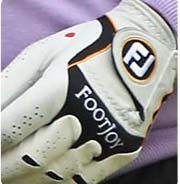
Louis Oosthuizen won the British Open Sunday.   And a little sharpied red dot on his golf glove had something to do with it.

That little red dot on his hand was what he looked at before each and every shot.  That glance, that focus on the red dot helped get him “into the zone” and to “dispel the distractions”.   It was and is his trigger.

  Triggers, as any sports person knows, are a big deal.   They can be a stare, a move, or even a thought but regardless of what they are, it is what they do that matters.   And for Louis, that trigger was something that helped him execute in a very tough job under a ton of pressure.

What’s your trigger?

Playing sports, mine was a tap of my left foot before the pitcher began his wind up.  My younger brother (a much better player) would slam his bat to the plate at the beginning of each at bat; a trigger that worked for well for him (and as an added plus, intimidated the opposition). 

But what’s your trigger at work?  We do great things.  We need to perform under pressure and just like Louis we’ve got to execute difficult tasks well (often repeatedly) without much room for error.

For some folks it’s a phrase or a word they say to themselves before the presentation starts, before the call comes in, or before they push that door open that says “no solicitors”.  For other folks it’s forcing that image of a mentor or a respected boss into your head, or it’s a quick look at your kid’s picture on your desk and the thought of who you are really doing this for.

But more often than not, I’m guessing there isn’t a trigger at all.

More often we just do.  We think hard and we work hard for sure, but I doubt many of us consciously while at work have a “trigger” that helps us get “into the zone” or “dispel the distractions”.  

I think we should find one.  One that helps you instantly lock into that zone.   Maybe it’s a head nod with your eyes closed for half a second as you hear the words or see the face that is your trigger.  Maybe it’s something you wear on your wrist you can cast a glance at 15 times a day. 

I have one.   I have a trigger.  I’ll admit I’ve gotten away from using as often as I once did but Louis inspired me to bring it back.  And yesterday (Monday) was the first day I employed it throughout the day in a quite a while. 

Grew the damn business I did.

Till next time,

Grow The Business.

Mark

Easy Still Needs To Get Easier

Standard

Fax machines ain’t dead yet.   Especially in small businesses.  But of course it’s not the machine itself that matters; it’s what it still does really well that does.   I got a neat lesson about that not long ago.  

Last month I had the luck of sharing lunch with one of our operations leaders while on a visit to our Canadian facility.    He had just conducted a tour of his area that morning and was animatedly recounting the response he gave to the question about why there is still a healthy volume of faxed orders from small businesses.

“Here’s why…” he said and deftly picked up an imaginary order form, proceeded to circle an imaginary box, write in an imaginary quantity and then stick it into an imaginary fax machine. Done.

Sweet.  Simple.  Quaint even.  So Easy.

And that is the point.   For a small business, it is easier (and sometimes a heck of a lot easier) to stick with the old than go with the new “Easier Ways”.

Let’s take an online reorder of a product.  Maybe it’s new name plates, or business cards or truck parts or whatever.   And think about the online ordering process experience from just about any company.

In this typical small business you’ve got to find a computer you can use to place this order (it’s not like everyone at a small business has one readily available)…. open up a Browser….find the Vendor…. get past the “Sell” area landing page and find the Existing Customer area (you know up at the top right somewhere…. in the tiny print)….. find that Sign in button….. Enter Email address…. Login name… remember or dig for, the darned Password….. Place the order…. Verify…. Validate…. etc etc.  Is it simple? Yes, for some.

But some find it “easier” to grab the reorder form that was mailed to them, circle a spot, write in the quantity and fax it. 

Others find it easier still, to remember nothing at all other than the bloody company name, pick up the phone, talk to a human and place a reorder.  

This isn’t a knock on web plays for small business; this is a reminder that “Making it Easier” is a critical factor for small businesses.  And always will be.

Warrilow (a leading researcher of small business) often reminds us that the majority of small businesses are not early adopters of technology but I’d contend that is as much about how easy (or not)  something new is to do versus how easy it is to do today as anything else- especially for small business.

So two easy questions to ask yourself when you are trying to provide support and solutions for your small business customer;

  • How can your recommendation “make things easier” than the current product and/or supplier in use today?  Write down those answers for your favorite products and embed them in your contacts and conversations.


  • Is the reason a SB won’t budge or buy really because the solution will require “more work” on the clients’ part than they do today? (Even if just in the transition?)  If yes, remove the work!   Invest in whatever it takes to do this; the return you get versus price obsession or proving ROI will be significant.


Till next time,

Grow The Business.

Mark

5 New Rules For Book Reading

Standard

After a recent conference meeting, I offered to send out a particular book to any sales leader who wanted one of my remaining stash.  Many folks replied requesting the book and my guess is that others used the link I provided to purchase the book at Amazon. 

Super.  I love people who read business books.  They get it.  

It was a little odd though.

Some sent notes saying things like “Please send the book and I’ll pass it on to each leader” or “I’ll send back it back when I am done with it”.  These notes are from people wanting to invest in themselves and are very well intentioned for sure.  I’m convinced though, that our “Library” experiences and our “Textbook” experiences in school have fostered the belief that all books should be treated as we once were instructed to, or as we might treat fiction books today; That books are to be read and read only; That books are to be passed around, or resold or covered in protective paper and never, ever to be written or doodled in.  

It’s time for the old rules to go.  I don’t think those beliefs suit us well when applied to essential books.  These types of books I’m talking about can change your life at work and at home.   

Here are 5 new rules to go by.

1) Never Share:

It’s yours.  You wanted this book to read.  You will, if you do it right, write in this book including in the Kindles of the world.  In a mad rush some day in the future, you’ll lunge for your bookcase because you know that there is this book or this author who has that idea  and you need to read it again to move this effort forward or make something happen.  Make sure that this book is in your bookcase or on your desk when you need it.  Recommend a book?  Yes.  Share a book?  Never. 

2) Never Borrow:

Never borrow one of these types of books from anyone.  Not your colleague, not your spouse, not your friend.  Borrow means you have to give it back.  Borrow is a complete waste of time.  Think you can read a non-fiction critical book and remember the 10 essential themes or tools it teaches?  If you can, welcome to the tiny percentage of folks with a photographic memory.  The rest of us need to skip the “borrow” approach to books.  Never borrow.  Leave that to the fiction and fun books. 


3) Always Write In and Highlight In Your Book:

Have a pencil and your favorite color highlighter in hand whenever your read one of these books.  If you are into the electronic readers be careful; you have to get the ones that easily allow you to write, highlight and retrieve (and Nook ain’t one of them).  Books are a collection of moments from great teachers, researchers and leaders and like anything else, offer some moments that are better and more striking than others.  Highlight them or write a note next to that moment.  Your books should be a complete mess of color and notes.  It makes it that much easier a year later or 10 years later, to pick up this book and find what you loved about it the first time you read it.


4) Spend Money:

Spend at least $60 of your own money every month on books.  About a $2 dollars a day on ways to be better, be happier, be smarter or be more of whatever it is you want to be.  You decide if you are worth it but if you are reading this, my guess is that you are.  


5) Re-Write the Best:

If you take the time to read these types of books (and you must), do so with a small notebook that you’ll never lose (I use a small red moleskin notebook).  When you read, there are concepts that on occasion will make your jaw drop, your eyes widen and your breath quicken as within this book and on this page, a brilliant perspective screams out to you.  These thoughts are so profound that a note or highlight just won’t do and in fact, you should carry it with you. Transfer that tremendous thought to your small notebook.  Carry it with you and look at it often. 

Till next time,

Grow The Business.

Mark
Quit Worrying About Sales

Standard

Quit worrying about making sales, sales people.

Quit worrying about the sales results, marketing people.

Quit worrying about sales performance at all, leaders of any type.

Just stop.   

Sales are not the issue here.  Meaningful Conversations are the issue.  We don’t have enough of them.

  • Worry more about that in the 81 customers you spoke with today, you only had 9 meaningful conversations; conversations about helping them solve a problem or to make things better or something.  Move that meaningful conversation number to 19 a day and more sales will follow.
  • Worry more about the 43  Voicemail messages you leave everyday and that maybe just 3 customers on average ever returns your darn call.   Work on making those voicemails more compelling and interesting and get those returned calls to 10 and more sales will follow. 
  • Worry more about how to entice a customer to hear (just hear! not buy anything) about how your company is different or better or smarter than the competition.  Worry about that and worry hard, and more sales will follow.
  • Worry more about how and which ways to get meaningful conversations going customers than worrying about all the tracking sheets, the coaching conversations, the sales huddles, the campaigns, the contact plans and the emails largely focused on you and “where you are with the numbers” and “where you need to be”.  Instead of worrying about the what, worry about the how and sales will follow.
  • Worry more about fixing “the wrong problem” for if you do fix it –  it is the absolute worst thing any person or organization can do.  Fixing the wrong problem ( “I need sales!”) results in sales that cancel in a month and litter the prospecting landscape with your bad name and arm twisting tactics.   Sales is the “wrong problem” to worry about people, it really is.  

Meaningful Conversations on the contrary, are well worth your worry and mine.  

Till next time,

Grow The Business.

Mark

6 To Ponder

Standard

These 6 questions are rarely ever posed as questions.  Everyone just presumes what the answers are.   That in itself is questionable.

Bring these questions into your next staff meeting or into your next business building brainstorming session or hell, just print em’ off and bring them to bar after work with some of your colleagues.

Discuss these questions.   Questionable stuff these questions are and they need some good answers.   Take your time, they’re biggies.

  1. Almost everyone says the key to Sales is “Listening”.   But what good is being a great listener if you can’t get your customer to truly talk to you?  And really, isn’t that the bigger problem these days? 
  2. If your Mantra is “Sell, Sell, Sell!” but you spend 90% of your day teaching and preaching only to efficiencies and work habits, should you change your Mantra or change your approach?  
  3. Isn’t it true that overcoming customer objections is the least of our worries compared to not having enough true customer objections to begin with?  
  4. When will the Content quality of Social Media become more important than the fact that media has become more social? 
  5. Instead of leaders trying to get people to be really good at 5 different skills at work; what if we created just more opportunities for them to do what they do well?  Wouldn’t we all be more successful?  
  6. Do we really think we can train tone, empathy, enthusiasm and sincerity in a training class?  Isn’t that like trying to train someone to be intelligent?

You’ve got some strong feelings on the answers or have more questions to ponder I bet.  We’re all ears.

Till next time,

Grow The Business.

Mark

10 Bold Sales Predictions

Standard

I keep having these visions of the very near future.   And if you want to rule the sales world, it would help if you knew what was coming.

Get ready. 


  1. Knowledgeable sales people will be less valuable:  Instead the sales people whose expertise in communication skills and customer experience skills will rule the sales world.   It won’t be what or how much a sales person knows that matters much anymore.   Customers and prospects can get so much product knowledge and specs with a wee bit of research online so when they talk to you and work with you in the future, you’ve got to blow them away. 
  2. Salesperson Reputation Management will be a must.  That CEO will Google a lot more than your company and will look for you on Facebook and Twitter and LinkedIn before she agrees to meet with you.  Best to remove the silly ball cap off your head in the photo next to your posts.  Cold calling?  Got thru to the decision maker?  Well in the future, he’s reading your twitter posts inside a minute while you’re trying to set an appointment with him.  Best to make sure he’s not reading your opinion of Miley Cyrus.
  3. The DIY (Do It Yourself) play will be DOA.  In B2B selling, Do It For Me (DIFM) will be the lead story again.  Businesses who early adopted the DIY way ranging from services like do it yourself online marketing products to HR software products are not near the bulk of the populace.  Sales organizations who get that a customer wants a “Help me get this done from A to Z” approach will be sales organizations that do the best. 
  4. Research Customer history? Not so much. Knowing a single customer’s history with you will be less and less valuable.  If we are honest, a client’s individual history has been a poor predictor of future tastes and buying motives anyway, so don’t obsess over CRM enhancements.   Instead, get obsessed with tapping into like customer industry market trends and as Wayne Gretzky says, make sure you “skate to where the puck will be”, not where it is, (or worse, where it was). 
  5. Readers Wanted:  Hiring sales people who don’t spend any of their own time self developing or let’s face it even reading will be over.  The sales arena methods, processes and tools are more fluid than ever.  Sales folks who wait to be spoon fed development just won’t make it anymore. 
  6. Hunters and Farmers will fade away:  But there will be Builders.  Client loyalty continues to wane.  Nothing like the worst recession since the 30’s to shake customer trust too with everyone including suppliers.  The Builder sales person will scout new locations to drive leads in new and different ways for sure but they also need to lay the foundations and stick around long enough to cultivate the clients.   Do It For Me lasts well past signing on the dotted line and hand offs in a low trust world will be sales killers. 
  7. Micro Networking will be your edge.  Associations, BNI and Trade Shows will still be around but it’ll be a mention of you in a blog or a connection in LinkedIn that will get you that meeting with the CEO.   These micro networks are a direct response of low levels of trust in the marketplace and it’s in these relatively tiny networks that sales people will flourish.
  8. Trust and Credibility training will grow.  Sales people and sales organizations will heavily invest in content that will focus on building trust.  Dollars will be siphoned away from negotiation skills, discovery skills, questioning skills and closing skills.  Good.  The sales challenges of the future will be creating enough credibility to first be heard. 
  9. Pay to Play Appointments will be the norm.   It’s happening already.  Used to be incentives were the tools to close sales.  In the future it will be just as common to use incentives to get appointments: to be heard.  Customers know in media drenched world; that their time is valuable; their attention is valuable and you’ll need to pay for it. 
  10.  The Gap between Sales and Marketing will close.  Company brand, integration, integrity and touch points are growing in importance and volume.  Sales will need to become a consistent extension of Marketing and Marketing will need to rely more heavily on the humans to create and manage the brand.


That’s what I’m seeing.  What do you see?

Till next time,

Grow The Business.

Mark
You Don’t Know, Jack

Standard

“Well Jack, that may be real, but it sure as hell isn’t interesting.”

Interesting how an insult Jack Nicholson received over 40 years ago is so relevant today.  The insult was one he deemed the best piece of advice he’d ever gotten. (See extras in The Shining DVD at Netflix)

I think it is great advice for us too.

The “insult turned advice” as Jack puts it, came from a film director back in the 60’s after reviewing Dailies in which Jack (like many actors of the period), performed scenes with great effort on being as “real” as possible on screen.  Hey, it was the 60’s and “being real” was where it was at. 

“Well Jack, that may be real, but it sure as hell isn’t interesting”

If you are in sales or marketing (and the reality is, we all are), this advice is perfect and a little more of what we need these days.    You can be “real” all you want with customers/prospects; stay the course, keep the message clear and lay out the values.  You can even do it like you’ve never done it before using YouTube or Twitter or WebEx or whatever, but truth is since everyone else is doing it that way, and you are largely just changing your mediums,  that may be just a different kind of real.

 And while that might be a different real, it sure as hell isn’t interesting.

And that’s a problem.  With all the clutter and all the short attention spans and all the competition, we should worry a lot less about being real, and start to get more interesting.

When you are selling for real, skip the “real”.  Sell with a story.  Sure, you can lay out the benefits of your product, it’s solving a problem or driving more clicks, or how that new logo can create a lasting impression with a prospect, or you can be interesting and start a “mental movie” in the customer’s mind by saying the same thing but with a story.    A story about the prospect that followed the van with the super cool new logo just to see where the business was who owned it, is way more interesting than the customer focus group data about changing a logo.  The stories are out there, and they are compelling.

When you are selling for real, skip the “real”.  Sell with emotion.  Nicholson learned “real” doesn’t work on the big screen, but ‘interesting” does.  Make a big deal with whatever it is you are selling and let’s hear the passion in your voice or on your video.  Let’s hear the energy about your 5 favorite products as you describe them to your client in breathless, halting, excited tones.   Go big with emotion and storytelling when selling, it intrigues and it works.

Assume that camera is filming live as you converse with your client or your media is making its first impression.   Your audience is critiquing you. 

Don’t be real.  Be interesting.

Till next time,

Grow The Business.

Mark

That 70’s Twitter

Standard

I was way ahead of my time.   You can be too.

Social Media is still exploding.  Like huge.  The FaceBooks, the Twitters, the Blogs and a dozen other tools are top of mind for consumers and businesses these days.  

Businesses are scrambling to figure out these tools fast because haven’t you heard?  People like you and me who use social media are supposed to have new thinking, new desires, new buying motives and if you happen to be about 20ish, perhaps you may be a new species of human known as a “millennial”.  

Nope, I don’t think so.   It’s not the people that are different so much; it’s the tools.

It’s the tools like Facebook, Twitter and Blogs that the media, the marketers and the businesses are getting caught up in.   But don’t be fooled.    It’s not enough to just embrace and use these tools.  If you are in sales, teaching or marketing; it’s important to think hard about why people are using and loving these tools; what comfort and value they bring; enhance your strategy and then act accordingly.     

You see, I was on FaceBook in the 80’s.  I needed to be if I was going to have a life.  I was actually on Twitter in the 70’s cuz’ I found it cool and informative and I was a heck of a Blogger as far back as the early 90’s.  

It’s true.  I was.

In the 80’s I had my little black book with Judy Lelievre (I was totally in love with her), Stephanie Bond (out of my league), Paula Kelly (we went on a date once) and a dozen other girls’ names in there.  I loved that black book (even without any faces) and every time their phone numbers, or addresses or my opinion rating of them changed, (yep,  I ranked them from a measly one star up to four “wicked awesome” stars), I updated that thing religiously.  I needed to be connected and in the know.

In the 70’s the Twitter feeds were always on the back of the stall door in he boys’ bathroom at St. Catherine’s School.    There I learned the latest thoughts (and some new words) about Sister Mary’s lightning quick back hand and about Sister John’s weight challenges.  Always something new on those doors and like the Library of Congress that now holds millions of Twitter posts; I bet that 70’s Twitter is still etched in metal in the second floor bathroom at St. Catherine’s school likely for eternity.

In the 90’s, I wrote a page every night, printed it on dot matrix paper and copied it for the hundreds of call center sales people so in the morning; my wisdom, guidance (and at that time a lot of capital letters), were placed squarely front and center on the chairs of my people.  Some read it, some chucked it, but just like today; it better be interesting/ helpful or people don’t care.

Here is the point.  Get to know the new tools.  Get to know them really well so you can better fill the desires that have been around for ages.  People always want to have relationships and always want to share an opinion.  They want to know the latest going on and they want a community of trusted friends and colleagues. 

Whether they find some of that on Twitter or they find it on the back of a bathroom stall door; it doesn’t much matter.  What matters is that you help your customers, friends and even strangers fill their desires really really well.

The tools may change but the innate desires of folks rarely do.  Know this and you’ll be ahead of your time too.

Till next time,

Grow The Business.

Mark