Why Your Network Stinks

Standard

Have a lot of followers on Twitter?  Nice.   A gazillion friends on Facebook? Cool.  500+ LinkedIn connections?  I’m happy for you.

Sometimes that don’t mean nothin’ though.

Marlene, one very talented trainer on the West Coast, reminded those of us gathered for workshops last week about the real value of a good network. 

A real network, Marlene taught us, is about how you compliment each other and how you leverage what is different about you.   A real network isn’t about how many of you there are or worse, about how many of you there are that are just like you all connected.

Marlene made us publicly identify the unique skills of our in-room “network” and record them in a literal (and of course, metaphorical) little black book allowing each of us to walk out with a networking gem.

“Use this book” she said “to tap into the help you need when you need it from your network.”

Thanks Marlene.  I think we sometimes forget that

  • A real network aligns you the sales expert with Jimmy the time management guru because one day you’ll both need each other when you finally decide to go chase that dream together.


  • A real network aligns you the online marketing savant with Sandy the offline marketing pro when that prospect you share just wants to grow the heck out of her business and yes she’s still got brick and mortar on Main Street. 


  • A real network aligns you the call center supervisor with Art the field sales manager when Art needs to beef up his team’s phone skills and you need to start dabbling in feet on the street.


Networks need to work.  And while amassing lots of fans who like you (and too often are like you), seems to be the focus for so many of us today, the better approach should be asking how does this connection fill the gaps that each of us have.

Till next time,

Grow The Business.

Mark

Yes To 5 Minute Eggs

Standard

my egg timer style

Yes, I have an egg timer.  

I read that book.  And it works.  Turn an egg timer on for 5 minutes and just go do it.   Tackle that pile of paper, clean that corner of the basement, start to read that trade magazine.

I carry that egg timer with me these days.  5 minutes is a long time.  Longer than you think and you get a whole lot accomplished. 

Go find the egg timer and use it.   Here are five 5 minute preps for your work week that’ll deliver results sunny side up. 

5 Minutes in the Car:  You got a commute longer than 5 minutes don’t you?  Well start that egg timer as soon as you hear a commercial block starting on that radio and listen; really listen.   You’ll hear all sorts of sales and marketing angles from credibility language to teasers to senses of urgency.  These commercial writers are pros.  They know how to get attention of a listener in no time; learn from them.

5 Minutes at the Coffee Shop.  Start your egg timer and walk in.  Walk up to a contractor, retailer, manufacturer or whomever you help, smile and say “I talk to folks like you all day, what’s the biggest challenge these days? And what’s going well? “Remember what they say and use it that day on the phone, in the field, on Twitter, on Facebook..  “ I was just talking to a customer this AM and he said….”  Yes, that credibility alone will get you some interest and sales.

5 Minutes with Your Catalogue.  Open to a random page and pick two products.  Raise your right hand and say “I will sell these today”.   Then take the remaining 4 minutes and 34 seconds and study.  Study the problems these products solve, the way they help make things better, the specs and the interest raising questions that go with them.  You’ll spot more opportunities because of it and yes, you’ll sell them, I assure you.

5 Minutes with Jeffrey Gitomer.  Grab any of his books, Little Red Book of Selling, The Sales Bible, The Little Teal Book of Trust or a half a dozen others.    They are everywhere around your building or your cube or just go to his site.  Start reading anywhere in his books for 5 minutes.  It’s some of the best prep for your day you can do no matter what job you have.

5 Minutes to Answer These Questions.  Grab a pen and write.    Who do I do this for? What do I love about what I do?  How will I truly help people today?    Look at your three answers and call the first right now and tell them you love them again.  Repeat the second to yourself three times.  And every time you accomplish the third; stand, smile and take a bow.  Your colleagues won’t know what the heck is going on but believe it or not there is nothing better you could be doing for you, your customers or your company.

Based on the average words people read per minute, you’ve got about 3 minutes left if you want to start that egg timer right now.  Crank her up.

Till next time,

Grow The Business.

Mark

3 Crazy Causation Theories

Standard

There is that “correlation not causation” perspective that people talk about.   I ran across it most recently last week reading something, somewhere, about Diet Coke. 

Some article talked about a reputable study a couple of years ago suggesting that you, the Diet Coke drinker, were by some large and scary percentage,  more likely to become obese if you drank Diet Coke vs. someone who did not drink Diet Coke. 

Good Times.  I love Diet Coke. 

Thankfully the article reminded us that the study was flawed because what you really had a hard time discerning was if those people who were becoming or were already obese, had decided to start drinking Diet Coke while “obesing” vs. the other way around so to speak.  Hence though there may be a “correlation” between Diet Coke and obesity, there is not necessarily, “causation” from Diet Coke to obesity.

There is a lot of that crazy “causation” stuff out there in the sales world too. 

Crazy Causation Theory # 1Successful salespeople have the best accounts; they don’t make half the calls or presentations you do, but are still raking in the most dough.

Ah….yes…I had the worst sales territory in the world back in my day.  I was insanely jealous of my fellow sales reps that had the best accounts or territory. 

So yes dear colleague of today, you are right; the successful reps often don’t make nearly as many calls as you do and they do have the best accounts.  Truth is though; their phone rings more often and their inboxes fill up faster than yours does.  When they do call out, they are more effective than you.  More often than not, these successful reps artfully cultivate customers, drive referrals through them and in essence, have and continue to deliver greater experiences to their clients thereby creating a misperception to the rest of us about what exactly causes what. 

Hats off to you Jack Barry in 1994, you’re territory was the best, but now I know you weren’t lucky; rather, you made it so. 

Crazy Causation Theory #2; The more calls or offers you make, the more sales you’ll get.

Nope, not in this business.  That adage in sales that  “It’s all a numbers game” is a horrible lie.  Never believe it.  Many of you reading this are you are working with a finite list of existing customers or prospects, or of calls coming into you; which you usually cannot control.

Pounding out calls or making 5 offers/closes on every incoming/outgoing call to a finite universe doesn’t make the sales; quality contacts do.  In Outbound calling, it’s even more dangerous.  Pound out some self serving, rapid fire voicemails or live monologues to your assigned clients hoping to the sales gods above that you caught the customer exactly when they have a need and you’ll put yourself in a worse position 6 weeks later or 6 months later when you try and sell them something else.   Customers want help, not pitches and power dialing.

If you have the world as your territory and the yellow pages as your lead source; yes indeed, it is all a numbers game then.  For a while.  Make as many calls and offers as you want.  And have fun with that as you’ll last about 6 months before you can’t wait to quit.  No worries, your boss already a replacement ready to backfill you who has the same false belief.

Crazy Causation Theory #3:   The harder you work, the more successful you will be.  

That ain’t true in sales.  It may be true for cemetery workers (been there, worked hard despite my co-workers’ slacker cries to “slow down!”).  It may be true for grocery baggers (worked hard there too and loved the job) and forklift operators (worked hard and proudly with no incidents thank you), but it is not true in sales.  Working hard just is not enough. 

Working hard will only get you so far; here is what else you need:

  • Acting skills: ( Be a story teller & have the ability to make your 41st  performance today look and sound like your first)
  • Thirst for knowledge and self learning. (Pssst… the webpage functionality just changed 5 minutes ago and your product offer is now outdated.  Do you really want to wait for the memo or the training on that? )
  • Mental Positivity.  If you close 15 % of your leads /opportunities then you are a ROCK STAR though that means the other 85% reject you.  Working harder doesn’t help you here.
  • Sales Skills; Have no idea where you are in the sales process or what a good question is vs. a bad one?  Good luck working hard here while you are in the dark.
  • Help:  Few sales stars work in a vacuum. They are not afraid to ask for help, seek guidance and even demand coaching.


There.  Now go chill and have a Diet Coke.  No causation there to worry about.

Till next time,

Grow The Business.

Mark

The Best Question For B2B Sales

Standard

It’s not so much figuring out the best question that’s hard.  It’s figuring out what to do with the answer.

I get asked a lot about what are good questions for prospects or customers.  I can give you a bunch and in just a couple of clicks you can find thousands of reputable authors, sales gurus and websites that’ll give you a whole bunch more questions to ponder for your customer contacts.

But what is the best question?  I’ve finally settled on one now.   This one question makes so much darn sense on many levels.    And as good as it is, remember it’s what you do with the answer that really counts.      

Before I share it though, let’s think first about the audience you want to ask this question of.  The audience here is small business; a group loaded with owners, type A’s, entrepreneurs, competitive personalities or all of the above.  The audience is full of people who are proud, smart, have healthy egos and who live and breathe their businesses.

So the best question should be one that is grooved right down the center of the proverbial small business plate, look very appealing and inspire a big ol’ swing.  

“What sets your business apart from the competition?” 

Yep.   That’s it. 

Simple but powerful for two reasons:

  • First, it gives your fiercely proud small business person the chance to take a swing and share what they believe is perhaps the single thing that makes them different, or superior than anyone they compete against.  It allows for passionate rant or a perfunctory punch of an attribute, positioning, feature, service, history or benefit that they think is killer or outstanding about their business.   That’s cool.


  • Second it gives you a chance to do the hard part, which is to listen and analyze the answer.  It’s a beautiful window to the entrepreneurial soul.   You must use that learning to position you or your products in an appropriate way as you continue that conversation then, or at a later time, with the small business person. 


You see the answer to the question is vital.  It is what the small business person thinks is importantly different about their business and is likely what they value in partners and suppliers as well.  When you know what is important to them about them, you can position you, your company or your products in a similar light that will at the very least, get further attention and most likely move the sales process forward at lightning speed.  And if by chance your product or solution helps that business maintain or attain that thing that sets them apart, you’re in.

If the small business person thinks their “50 years in business” is the competitive differentiator then you have to consider that perhaps sharing your long personal tenure in the industry or the healthy company track record you have is a big deal for them when they consider working more with someone like you.  For them; being credible is important.

If the small business person thinks that having a “one stop shop” is a big deal setting them apart from the competition then you know that you have to consider positioning your services as being “easy to use” or “comprehensive and easy to access” because it’s very likely that that is something the small business owner wants out of a supplier or partner.

If the answer to “ What sets you apart from the competition?” is about “our low pricing”, or “the highest quality”, or “the most customers”, or “ our product breadth” or a dozen others then you have a colossal hint at what the buying motives just might be when they consider doing more business with you.

Pitch the question.  I believe it’s the best one out there and small business will hit it hard; just don’t drop the ball; do something with it.

P.S.  If some of you are thinking this is a great question for the C-Suite.  You’re right; similar personalities sit there too.   Have at it.

P.S.S  If some of you are thinking Hey Mark, asking that question you need a little trust first don’t you?  You’re right about that too.  Read up.

Till next time,

Grow The Business.

Mark

So Misunderstood

Standard

Some sales people, when they hear my name, turn their heads away and shrug.

Some sales people, when they hear my name, feel insulted.

Some sales people, when they hear my name, get very angry.

It’s too bad really.

Some sales people, when they hear my name, just don’t get it.   I am so misunderstood.

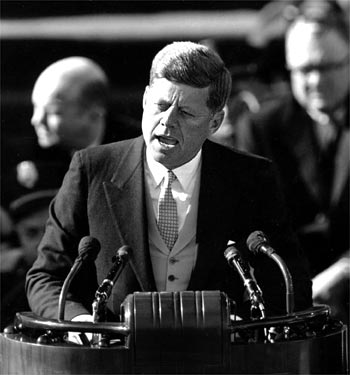
Because without me, some of the greatest sales people in the leadership world would just about be forgotten.   Without me, you’d not remember half the moving messages of an Obama  or  Reagan or the stirring words of Martin Luther King on the steps of the Lincoln Memorial, or the timeless candor of JFK at his Inauguration.   

Without me, some of the greatest sales people in the traditional selling world would just about be lost in the crowd.  Without me, you’d not have heard half the messages of Tony Robbins, Zig Ziglar or Jeffery Gitomer.

Without me, some of the greatest sales performances around us would just be of the ”Oh So Average” variety.  That guy in Florida, the one that landed the fortune 100 company, that would have been different.  That appointment setting guru, she wouldn’t get half the meetings set up with decision makers she does today without me.   

My name is Scripting.  And I am so misunderstood.

I am not overstating this.  Barack, Ronnie, Martin and John performed crafted messages.  They worked from scripts.  They had visions and dreams and goals to sell.   They followed that script; they wanted to; they needed to.

There is an unwarranted aversion some sales people and sales leaders have to being handed a script. 

You have to remember that a script is content crafted in such a way that a message is superbly told, a vision is passionately stated, or an experience is exquisitely orchestrated

No one who hands you a script is trying to script tone, genuineness, sincerity, passion and excitement.  You own that.  

No one who hands you a script is trying to “de humanize” you or the experience.  It’s the opposite.  That script, that process, that well crafted content is there to allow you to maximize your talents making the experience sound nothing like a script.   Learn from the masters and make the script invisible; that is what you own.   

The great sales people of the world, the industry or even in the building you work in wouldn’t dream of “winging it” or thriving off of improvisation; it just doesn’t work. 

Till next time,

Grow The Business.

Mark

From The Red Book

Standard


I carry a little red book around with me.  I write things in there that I like, I hate, I worry about or get excited about.  I bet you all have a little book or notepad too.

I looked through it over the weekend.   These strike me as things I want to write more about, support or rail against, or just plain share and do something more with. 

How about you?

  • I hate that human condition that drives online business reviews. Have a problem and you rant online no matter how little the issue.  Skews everything. Totally unfair.


  • I doesn’t matter much if you have the newest tools or software on your desk (like a new CRM for example) if you have no desire to change your routine or results to begin with. 


  • Listening is cool.  But If you can’t get your client to talk to you, what the heck is there to listen to?


  • Coaching is hard.  Coaching to stats, processes and order entry is easy vs. coaching to communication, selling and service skills.  That latter will grow the business and former will give you the chance to do it.   


  • It’s only a matter of time before what’s credible on the internet matters more than that something is in fact, on the internet.  And that time is very soon.


  • Twitter, Facebook, LinkedIN and all the rest haven’t changed us.  We have always loved, and needed a network of engaged, trusted friends and colleagues.   That need has always been there; it’s the tools that keep changing.


  • Glen Garry Glen Ross is simply the greatest sales movie ever and is Jack Lemmon’s best performance. The language is rough but the Mamet writing is priceless.


  • Ever notice on Mad Men how they have to sit the prospects down in the 60’s and explain in detail what marketing and advertising is in order to sell it?  Well we gotta do the same thing somehow these days when we sell online marketing.  It’s still kinda foreign to people.


  • Service Reps have the most satisfying job in the world.  You pros here know what I am talking about.


  • Open ended questions are so overrated unless you have some trust established; otherwise it’s just offensive. 


  • Adult learning theory continues to be disproved over and over again as weak.  It’s about “what” is being trained that matters, not the learning “style” of folks. ( Just as I suspected :))


Till next time,

Grow The Business.

Mark

Kill all Leads, Commissions and Sales Reps

Standard

I’m done with these three.

You should be too.  It’s tough because I worked them, fed my family with them and have been one for a lot of my life.

But I don’t believe anymore in what we call these three.

We need to change the names of these things.   It would do us wonders on so many levels.   Bad names can hurt what people think about you.  Bad names can hurt what you think about yourself.

And I’m done with that.

**

Leads.  Ugh.  Please, this is word is the worst offender.  “Give me the leads”.  “The leads stink”.  “I need more leads”.  The word “leads” just reeks of a faceless commodity. 

Change the word to “Needs”.  Every lead is really a person or people with a need.  And every Need has a solution or a way it can be filled.  A Need is customer focused.  A Need is something to rally around.  A Lead on the other hand, is blah.  A Lead is for us.  And “us” should not be the focus.

Think of what would change and how we might feel or do differently if:

Leadflow becomes Needflow. Lead Management becomes Need Management. Lead Generation becomes Need Generation.  Isn’t that better?

Commission. An ugly heinous word in sales don’t you think?  A word so commonly hated that many companies go out of their way to advertise that their sales pros are not paid on something so ghastly as to be called “commission”. 

Let the Commission Plan become a Mission Plan that “rewards” behaviors and results.  “Commission” the word, disappears and “Rewards” becomes the lead story.  “Rewards Pay” details not what portion of a sale price goes to a rep but what portion is added to the reps pay as a reward for behavior or results. Semantics?  Yes, my point exactly.

“Rewards” the word doesn’t sound like a “take” or “cut” or an “added cost” to a client ( or to the sales rep).   Rewards are awarded by the boss or the company for a mission accomplished well.

Think of what would change and how we might feel or do differently if:

Commission payout becomes Rewards payout. Higher Commissions become Higher Rewards. I work on Commission becomes I work on Rewards.  Client Commissions become Client Rewards.  Isn’t that better?

Sales Rep:  Ah….. the almighty fearful title.  For at least 60 years people have tried variations to hide or mask or those two words.  Nobody it seems wants to be called a Sales Rep.  No doubt you’ve heard or have been an “Account Executive” or a “Territory Manager” or a “Sr. Business Development Mgr” and on and on….. all the while being um…..well, a Sales Rep.

Truth is, the name “Sales Rep” sucks.  It has always sucked.

It’s not customer focused, it’s company focused.  It’s not broad sounding, it’s narrow sounding.  It’s got one of the most stereotyped images around of greed, neglect and selfishness.

The new name is simple. 

Help Rep.

Help.  It’s what any true sales rep really does anyway.  Help fill a need.  Help fix a problem.  Help make something better. Help you feel happy or organized or in control.  Help you grow your business. Help you run your business.  

Think of what would change and how we might feel or do differently if:

You walk into a Macy’s store and you talk to a Macy’s Help Rep, or walk on a car lot and talk to at Toyota Help Rep, or call Deluxe Corp and get a Deluxe Help Rep.

Maybe all the Help Reps fly in for a big Help Conference in Chicago called the Big Help.   Maybe there Help Contests for the Help Reps.  Maybe you get better and better at Helping vs. better and better at Selling. 

**

Pretty simple stuff these changes are to make.  And if we just do it I swear we could change a little bit of the world.

Till next time,

Grow The Business.

Mark

The Bird

Standard

I’m not thinking about the America eagle, or this year’s Thanksgiving turkey or even the late Detroit pitcher Mark Fydrich known as “The Bird” (loved that guy when I was a kid..RIP).

I’m thinking you know, The Bird.

This is a family blog though so I won’t just come out and say it.    Instead I’ll call The Bird a safe acronym like “TB” for the remainder of this post.   And since the acronym “TB” is more commonly known as Tuberculosis (which is a heck of a lot worse than this other TB I’m talking about) by comparison, mine is pretty tame.

What I will say and list for you, are the times during a typical day or a week that I feel I am getting TB (not Tuberculosis type) from businesses.  Not an “in your face” blatant nasty service experience that everyone writes and complains about, but a sudden unpleasant little message you flip in my general direction.  

And that is not good.  Maybe these little affronts are a sign of worse things to come from this experience, this business relationship.  Maybe these little affronts stop the relationship process really before it even starts.

My guess is that businesses may not have a clue they are doing this and if that’s the case, please get a clue.  And if it is being done on purpose, quit it.

The Bell.   If you’re a small business or even a large one and aren’t drooling at the prospect of a prospect walking in your door but instead place a little silver bell for me to ring to get your attention, then you are giving me TB.  Guess I’m not that important.  I suggest a mirror, a dog or some sort of bell on the door I open that gets your attention before I need to.

Flat Screen & Standard Definition TV:   Have a nice bar?  Have a nice place casual dining establishment?  Great, I love it.   But every time you hang that 47” screen over your bar but only show standard definition programming it’s like giving me TB.  If you can’t cough up the costs or work out the deal to broadcast HD don’t insult me with the blurry picture on your beautiful television screen while I sit paying 500% margins on your over priced local brew.  What’s next? Skimping on the soap for the dishwasher?

 “noreply @..  Ever get one of these emails?  If your business sends out any emails with the sender labeled like this for any reason, you might as well give me TB.  Staff the darn mailbox or forward it to someone who cares because if the recipient is your customer and he or she cares to reply; you should care to listen.

Newspapers Outside The Lines:  This one drives me crazy.  You are giving me TB when you insist dear supermarket, that the newspapers be lined up against that wall at the far end of the store beyond the check out lines.  Now since I just decided upon viewing that I want a newspaper, I must decide to get back in line to pay for one. Nope.   Same goes for the firewood and charcoal and the winter shovels.   What is this losing sales tactic called anyway? “The After Purchase Purchase?”

The 24 Hour Sales Cycle (NOT); Ever get a LinkedIn invite one day and then an invitation to spend money the next?  Ever get a ReTweet on Twitter or a nice comment on your blog post one day and then a pitch from that person or business the next day?  I have.  I’ve gotten them from former colleagues, friends, people and businesses that I know or knew.  Ugh.    Faux Networking is TB in capital letters (I mean like really big capital letters).

TB is fowl.  And while you undoubtedly have your own examples of TB in the marketplace (and please feel free to share),  figuring out if you, your business, your team or your department is doing TB innocently to customers/prospects is important to think about too.   It may be hard to spot or put a finger on so to speak but it’s well worth the look. 

Till next time,

Grow The Business.

Mark
Know Surprise

Standard

Surprises are cool. Surprises stick. Surprises set you apart.

You know the value of surprises don’t you?  I’ve seen a few cool surprises recently.

  • When this doctor’s office gets your call that you’ll miss your appt but then sends an employee out to you (and your broken down car) a mile from the office just to keep you company while you wait for a tow truck and then drives you home; that’s a surprise.


  • When the Tweet comes out with “Here’s a free e-book with 50 ways to build a social network” and the next day,  “Here’s 50 ways to be a sales rock star” and this is all good stuff with no strings attached and there is nothing you could even buy from this guy if you wanted to, that’s a surprise.


  • When Sal, the Nashua, NH  furniture sales rep here, sends you a handwritten note a week after a sale stating it was “nice to meet you and Mary and little Billy”, even that’s a surprise.


These surprises happened to real people I know personally just over the last two weeks.  Surprises are powerful. Surprises get your attention. How are you surprising your customers?

Here are 5 surprises I bet small businesses would love:

  • Send a Thanksgiving card to 50 of your best customers. Whether you work for a big company or for yourself, do it on your dime and on your time.  Nobody expects Thanksgiving cards in business but be thankful; these customers help you feed your kids.


  • 4 hours after a small business places an order with you, call back and say “I had a minute and wanted to say thank you again for your business today, we really appreciate it”.  And then, hang up.


  • Send training or sales or marketing tips to your clients.  They train, they sell, and they market too so they’ll appreciate it even if they only buy widgets from you.


  • Give your last name right at the start of any interaction and spell it for the client, prospect or dissatisfied customer. You’d be surprised how surprisingly welcome that is for folks and how rarely it really happens.


  • Connect via video when talking with a client, or arrange for a Saturday or Sunday presentation when the owner is in office and things are a little quieter, or just text everything back and forth cuz’ you know she does not want to take up the business phone line while talking with you.

 
Some surprises are surprisingly easy to do, others take a little more work but you get the idea; Surprises rock. Surprises differentiate. Surprises grow the business.

Get to know surprises well.

Till next time,

Grow The Business.

Mark

Going Soft

Standard

Soft data gets a bad rap.


“I’m not so sure, that report is full of soft data.”

“That Training is soft skills training; I need Training that is going to make a difference”.

I’ve heard those two phrases more times than I care to remember (including hearing myself say them a few times over the years).

The problem with the word “soft” is that in some cases it’s perceived as negative; that “soft” stuff is less important than some of the “harder” stuff. 

The longer I look around though, the more I realize I haven’t always thought of that right.

  • Hard data is great, except when you missed the soft data that is often customer opinion, employee engagement, social media perceptions and the next cable network pundit’s nasty opinion about your brand.
  •  Hard skills like system knowledge, order entry, product knowledge and compliance training are great, except when the soft skills like negotiation skills, engagement skills, sales skills, coaching skills and customer service skills disappear or take such a back seat,  that they never get trained.

We are all guilty of trying to make soft data and soft skills “harder” by trying to quantify them; assigning numbers, equations and decimal points to “soft” stuff in an effort to make it more like the hard stuff.

Problem might be that we are just not comfortable or confident with “gray”; and that we want, like the hard skills and hard data, for things to be more easily measurable and more black and white.  

But there are few wildly successful sales people whose soft skills are not often the differentiator in customer relationships.  And there are fewer superstar entrepreneurs, consultants, customer service reps, managers, teachers & marketers who don’t absolutely rock with soft skills or even in the use of soft data to get the job done.

So maybe, just maybe, the next time someone says to you “You’re going soft”, you should just say “Thank you”.

Till next time,

Grow The Business.

Mark