I Sent My Wife Roses For No Reason. What Did You Do?

Standard

Yesterday, I sent a dozen red roses (in a beautiful vase I might add) to my wife at her place of work. 

I sent them just because I love her; no other reason.

In fact,  the card read….“Just because I Love You.”   

Upon receiving such a thoughtful delivery and reading the attached note, my lovely wife apparently teared up in front of all her co-workers, which of course made said co-workers tear up, and they in turn even got visitors to tear up.   Love all around and tissues for everyone.

Ahem.  🙂

I know.  All you guys are looking real bad right now.  

Some other guys are looking bad right now too but they don’t even know it.  They will of course when they get home and see this blog post taped to the fridge like a sentry guarding the bottles of beer that lie within. 

Fun.

But my friends, I’ll take the heat because here’s my point; you can’t be boring or predictable, you gotta keep it fresh.  You gotta surprise.

  •  Are you the sales rep that sent the Thanksgiving card out to the client to say thank you for their business?  Probably not, but some other partner/ supplier somewhere else, probably did.  You go ahead and send out just one card like everyone else.
  • Are you the sales leader who suddenly sat down and called out on behalf of your sales person to set up 5 appointments just for her, so she had a chance to knock em’ dead with her presentation?  Probably not, but some other sales leader, somewhere else, probably did.   You go ahead and keep coaching her on her presentation.
  • Are you the sales rep who called looking to hit voicemail  (cause you knew if you got your customer live for this, it would be interrupting) and left a message about the link you sent to help them deal with a problem totally unrelated to what you sell?  Probably not, but some other sales rep, somewhere else, probably did.   You go ahead and call only when you are looking to hit your quota.

You love your significant other.  You love your customers.  Keep it fresh.  Surprise the hell out of em’ now and then.   You know it’s good.  And yeah, you beat back the dreaded “boring” and the competition every time. 

Till next time,

Grow The Business.

Mark

What’s Easy

Standard

image from hockeyindependent.com

I write a lot about easy.  But this one’s a little different.

I write often about how important it is to small business customers and prospects that your products are easy, that your website is easy, that your billing is easy, that your ordering is easy, or that your customer service is easy.    Basically easy is what small business needs.  

Here’s the rub though.  What’s easy for small business isn’t necessarily easy for you.

What’s easy for small business is:

  • To Keep Who They Got:   Dislodging a vendor in a small business is not easy.  Last I checked SB’s don’t have a team of sales or process strategists charged with looking at the value of bringing something or somebody in brand new.  Nope it’s more like, “I’ve been with them forever”, or “I know his family”, or “It’s too much work to change mid year”, or “This thing is like 1/100th of my budget why do I care?” etc. etc.     You have got to make it easier to switch.


  • To Blow You Off:   Heck, they themselves are or were, sales reps or account managers in one way or another for their own business-most of em’ anyway.  And they have staff trained to get rid of sales reps and marketers like you and some personally make it an art to avoid everybody but customers, family, their accountant or their banker.  It’s not that they don’t think you have a good product, it’s just that there’s no darn time to spare.    You have got to make it easier to see why just a little time with you might be valuable.


  • To Not Believe You:  The Small Business owner who has that type A personality, and is the wearer of all hats, and with the ego through the roof and the work ethic like nobody else;– Is she going to flat out just believe you when you say you can help grow her business?  Heck no.  You have to make it easier for her to trust you. 


I usually end all my posts with real applications, real ways to get it done.  I usually give you a few things you can just run with right now and tackle the problem and grow the business. 

That would be too easy. 

And there’s a better way.  Though this blog is only 6 months old, type in the search box the word “easy” (10 posts) or “value” (13 posts) or “credibility” (7 posts) or any darn word you think might be make sense.  Therein is a lot more help to make it easier for you and your customers.

Till next time,

Grow The Business.

Mark

Chairvolution!

Standard

It’s the easiest and most effective “how to sell” prop in the world. 

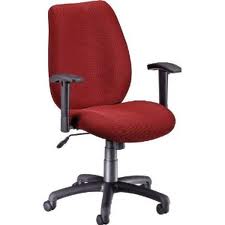
The simple chair.  

When I get a chance to speak to sales folks, I’ll occasionally launch into using a real chair that happens to be lying around to help folks learn how to sell.  Every time I do it; I see heads nod in enlightenment and jaws literally slacken as many salespeople have “aha” moments.

It resonates so well that I typically walk away from these little talks saying to myself “Geez, I’ve got to do that chair thing every time!”  But then, as I am apt to do; I forget to do it the next time.   Not any more, I am committed to embracing the chair!

So with apologies to the office furniture and chair sales folks out there, I must explain that the ubiquitous chair is the perfect prop to represent your “product” or whatever it is you are selling or marketing.  It is precisely because the “chair” is so common and so “everywhere” that it works.   It works because it allows you the teacher, speaker or trainer to easily put emphasis on more than just the product and focus on the positioning, credibility and solutions your product or service really needs to get sold.

The chair is big.  Really big.  You could spend a whole day preaching and teaching a lot more than just the 6 lessons below but heck, it’s a start.  

Welcome to my Chairvolution.   Please steal shamelessly.

6 Easy Chair Selling Lessons

Start by saying “I am going to sell you a chair” and then follow the guide below as you teach and preach.

Lesson 1: Put the chair behind your back and ask (as if you are the sales rep) “What kind of chair would you like?”  This is a great first lesson because it is about what not to do.  In this harried, crazy, no time and no trust world of buyers we live in; the age old “Tell me what you dream” is really just about dead.  Open ended,  out of the blue questions more often stop sales processes, not start them.  You’ve got to lead folks or give them a comparative reference.  Psychology notes that comparison is less brainwork than creation.   Discuss.

Lesson 2:   Bring the chair back from behind your back and say “This is our most popular selling chair”  Pause, then ask the group –   “How many of you just ever so slightly had their interest piqued?”   Here is a great 2nd lesson in the value of popularity.   Popularity is so important that the next 2 lessons using this chair go even deeper there.  There’s a reason Amazon built that algorithm! 

Lesson 3:  Continue holding onto the chair and say   “This chair is the most requested one by the folks at your company”.   Pause and ask “What’s different in this lesson?”  What’s different is that Popularity positioning you shared in Lesson 2 has been turned around and is now positioned with something more valuable to the client.  That is that prospects “like them” ( i.e. those people that work in this company) love this chair.  No doubt the interest of the group is piqued about the darn chair.  Discuss.


 [Here is a good place to remind the group that we have yet to talk about the features and specs of the chair as a means to sell it,  and oh by the way…in all of these lessons today-we won’t!]

Lesson 4;   “Everyone in your department on the first floor has this chair”   Here it’s getting obvious that the closer you get to the truth about popularity of product by customer and prospect type, the better.  Study after study shows that most people need to and love to do what other people just like them do and make similar choices.  Yep, like the Amazon pop-ups and the Net-flix pop ups; you get it.

Lesson 5:  Switching gears, look longingly at the chair and say “This chair will make your back feel better” or “This chair will get that capital expenditure under control” or “This chair will give your employees that “Google” office feel they want”.   The point here is that you are showing just how much work needs to be done before you talk about the darn chair to prospects.  What problem it solves, what pain it eases, what yearning it fills.  Have fun with this part as nary a mention of price, height or color is in sight. 

Lesson 6:  Take the chair and roll it up next to one of the participants in the room and say “Your mother suggested I talk to you about this chair”.    Have a good laugh at those who say “I don’t like my Mom” but the point is this –  The best selling approach ever is a credible referral from someone the prospect trusts or even better; loves.   Sales people should work hard to secure referrals and references.   Frankly with those in hand, there is no real selling involved, it’s already done.

Don’t couch this one folks.  Unseat all those beliefs that selling is about price and options.  Lay it all on the table in a different way this time and use that chair!  I promise it will open a brand new door to how salespeople think about sales.

Till next time,

Grow The Business.

Mark

5 Oddly Wonderful Things to Say to Customers

Standard

They are only “odd” because folks don’t say them too often.   And they are “wonderful” because well……just read on, and I’ll tell you.

  • “I just came out of a Training class on….”  We rarely say this yet many of us attend training regularly in the classroom or online.  We think it is a sign of weakness that we had or went to…um.. a training.    Our clients want to know that you are getting training because heck,  maybe you are getting smarter about them.   And even if you didn’t go to a recent training,  our clients want to know that you read that book on small business marketing trends or that other one on customer loyalty.   Smart sells.  Wicked Smart sells even better.  You have to share it.


  • “I Love You…”  Ah yes, warm and fuzzy for sure but I say, why not?  Why not say “I love you” but tie it to a good reason?  “John, this is such a pleasure.  I love to talk to 5 year plus customers because you know the marketplace and you know us….” Or “I love to talk with customers who take the time to give us feedback, I know how busy you are …”.   Love is a word customers don’t expect to hear, at least from a partner or supplier.  And unexpected love is a very cool thing.


  •  “Guess which one is the most popular these days?”  If you want to improve your chances of a client or prospect listening well or listening longer to your presentation (or even a conversation), you should embed survey-like questions early into the experience like “What % of retailers do you think would say “keeping returning business is more important than getting new business?”” or “Which do you think most retailers prefer, this or this?”  You make the call on the question but do two things; draw out the answer so you insert your value proposition,  and then if you don’t believe me that this works,  read the bestseller Made To Stick (Heath Bros) and take a look at the evidence supplied on page 89.  Folks will pay attention longer to see if they are right or just to know what the right answer is.  Find a way to conversationally add this to your client facing meetings and contacts and more sales will ensue.


  • “You can trust our business with your business…”  This is obviously a B2B thing but 10 years ago I pitched this phrase as something we could and should close phone calls with or have on business cards or ( and these were really new then): emails!  etc. etc.  I have never forgotten it and always wanted to make it part of our customer experience but we haven’t done it just yet.   Now I have proof that this would work –  Have a look at this Roger Dooley article at his Neuroscience Marketing blog  and learn about the real evidence supporting in “10 Words That Build Trust”!  Then, tell me why you wouldn’t want to say “And as always, you can trust our business with your business, have a great day!” 


  • “Here’s what I want you to do..”.    It’s a rare day that we sales and marketing folks send out samples or emails or catalogues or brochures or links and ask any customer/ prospect to do anything.   The most we often eek out is “Have a look and if you have any questions let me know” or “I’ll give you a call next week and you can let me know what you think.”  Ugh.   Be specific and give instruction.  “Have a look at page 3 and circle your two favorites” or “Watch the video and jot down two things that you want more information on as that will be my first question to you when we talk next week”.  People like to help people.  People like (most of the time) to have clear direction.  Psychologically, people will more likely keep that next meeting when there was something of detail they were supposed to do vs. just another scheduled contact.


There, oddly wonderful aren’t they?   Let’s make them a little less odd shall we? 

Till next time,

Grow The Business.

Mark

When Success Stinks

Standard

Success is usually good, but sometimes it stinks.

My first huge commission sale came in late 80’s.   I got it when I inadvertently answered the company’s phone line past closing time at 5:15pm on a Friday.   Two weeks into my first real sales job and it was the Big City on the other end of the line looking for a spring water vendor to supply bottled water coolers and water for the school system whose water supply was just declared undrinkable.

I got that sale.  I was even on local TV news that weekend and was shown delivering and setting up water coolers in the schools.  I was a sales rock star at my company.  Already.

I thought I got the sale because of my insanely good sales skills on that phone call, my confidence and my gargantuan intelligence.  And I also thought that being a salesperson was a pretty easy gig.

And then the sales stopped coming in.

Truth was, we got the school sale because we were the only bottled water company that answered the phone after 5pm that Friday and the city needed the schools to have water for the students by the time classes started again on Monday.

But I didn’t know that then.  I couldn’t see that.   It took me about a year to realize I had nothing to do with that sale and that sales success takes a lot more work and learning than I wanted to accept at that time. 

Success is usually good but sometimes it stinks.  

Every once in a while think deep about that large sale you just landed, or that marketing initiative showing good results or that training you just delivered that got rave reviews. 

If you know deep down you got the sale out of luck:  don’t learn from that success.    If you know deep down that your marketing initiative launched at the same time a new sales rep incentive plan did, don’t bank on that success as a learning tool.   If that training class everyone is giddy about you suspect won’t bear out a month later in results on the floor, check into those results and don’t bask in what is really just the “promise” of success.

Given that, if the phone rings at 5:15pm on a Friday, make sure you pick it up and consider those moments as gifts that you deserve and not moments to learn from. 

Till next time,

Grow The Business.

Mark

Inanity

Standard

Sometimes the reasons we give people to buy are inane.

Inane as in lacking sense or silly as dictionary.com would define the word.

Here is my most recent TV commercial favorite.   It’s the garage door that still works (praise the almighty) when you lose power at your house.   This 30 second inanity begins as the fearful family pulls in the home to discover that there is no power to the house but Holy Driveways Batman, the garage door still opens!  We are saved!  

 Are you kidding me?   A) How often do you lose power and B) are you not capable of getting out of the car and using your key to the front door?  So silly.  The scary part is that some bright marketing agency felt that a garage door that works when you lose power is the key selling feature and that it should be the central part of a 30 second television ad, i.e. the reason buy.  

That’s inane.

If inanity lives in prime time advertising it may still exist closer to home.  So let’s make sure in the B2B world we don’t have any inane reasons for someone to buy hanging out there.    Let’s make sure we don’t have reasons that lack sense or are downright silly. 

I doubt these inanities still exist around here but just in case;

You should buy because I’m your account manager.   I remember a time when folks would believe that and even say that.  That having someone “assigned” to a client to be “account managed” was gloriously stupendous all by itself.   Many a sales rep used to think (I hope) that since the customer has “me” as an account manager well that would…um….be a darn good reason to buy.   A classic sign if you or your company still possesses this kind of inanity is if you get upset, hurt or worried when a customer chooses to buy a product some other way like going online or by calling someone else at your company.  

You should buy because We’re the cheapest.  This is B2B folks; cheap is cheap.   70% off, 60% off or”I can beat everyone’s price” gets you less and less today in the sales game.  You might actually do better by raising your prices; it can reflect your investment in services/ product and impart more literal or perceived value to a client.  Cheap makes you look cheap.  Cheap undervalues what your product does.  Cheap is something to avoid, not embrace.   Very few can pull of cheap as a reason to buy and those who do it well leverage far more than the low prices to retain and acquire customers.

You should buy because We have- “hours from 8am to 8pm 6 days a week”, “.. a 100% guarantee..”. “ …free shipping on..”, “..online ordering..”, “ ..a loyalty program for…”…etc…etc”.  These are pretty much Table Stakes folks;  that is to say that  everybody has these and simply needs to have them to get a chance to even play at the table.    And frankly, one of these alone or even all of them together is not a killer reason to buy.   Conversely, and somewhat unfairly, not having these can be a reason not to buy from you.   

So let’s take a lesson from our colossally idiotic consumer group that is dumbfounded by what to do when the power goes out and they are caught outside with just a garage door remote control.    Our business clients aren’t like that; they carry a bunch of keys to get where they need to go and they’ll need a lot more from you before they look to you for help.


Till next time,

Grow The Business

Mark

A Card

Standard

She looked at the envelope and didn’t know quite what to think.   She didn’t expect anything from him and hadn’t for a long time.   He had drifted away it seemed, they hardly ever talked yet she still felt loyal to him.

So she opened the card.

**

Dear Erin,

I wasn’t sure given all that was going on that you’d stay with me.   But I am so happy that you did. 

We have shared much over the years but I know I’ve taken you for granted.   I know I just expected you to always be there.   I know I just assumed you would never leave me. 

And you didn’t.   For that I am so grateful.

When we hit that rough patch last year I got scared.  I’m still a little scared.  I realize I had gotten careless around you and around others in my family.   You Erin, were there for me in the beginning when I was young and just starting out and I think I forgot that.

This note is very important to me because you are important to me. 

This note says “thank you” for being there then and being there now.  This note embodies that adage “Make new friends but keep the old, for one is silver, the other gold”.

Erin, thank you for sticking with me.  Thank you for keeping me close.  This note says I won’t forget that ever again. 

Thank you for your business,

Steve

**

Surprised?  Unfortunately, most of us reading this probably are. 

But Erin is not a lot different from many customers who have been with you for a few years. She’s likely similar to customers you have or maybe your business has, that despite the fiscal challenges, the new competitors she could choose from, and maybe even absorbing your price increases, has chosen to quietly stick with you.

Would a business owner write a note or have a card ultra personalized like in the above example for Erin?  Sure, why not?  Maybe not as much as written above (but I wouldn’t besmirch anyone who wanted to write a card for their top 10- 100 customers like above- well worth it!)  The point is that a card done right can be a very special message to a customer, one that can make them feel cherished.

A well done card maybe for Thanksgiving, or Christmas, or for any Holiday can mean so much more than a mere ”thanks”.   Heck, a simple “thank you” note done right can mean something quite wonderful.

And it should.   

It’s time to start planning about how you’ll acknowledge your clients. 

Do it better this year.

Till next time,

Grow The Business.

Mark

6 Questions Never To Ask A Customer

Standard

Current customer or potential customer it makes no difference, here are 6 questions that need to be dead.

1. “How are you today?”  Nothing screams I’m a sales rep like “How are you today?”  Jeepers Criminy!   You just interrupted a customer with an unannounced visit or a phone call and you ask that?  Might as well have the words “Commissioned Sales Rep” read across their phone display or plastered on a bright red button affixed to your lapel.

2. “Are you the decision maker?”  What, are you stuck in “Boiler Room” reruns?  How much more offensive can you be?  Most people you need to ask that question to have some influence (if not being the wife, the husband or colleague of the one who is).  Talk about self serving and rude.   Try being polite and ask “Who besides yourself has a say in the decision process?”

3. “Are you happy with your current supplier?” All right!  You are looking to trash the current vendor!  Way to make a sale.  Or maybe you are hoping you are calling at the right time (exactly) when dissatisfaction is underway (good luck with that sales strategy).  So 80’s.  Presume always the customer is happy with the current provider and sell on your competitive differentiators.  If there is dissatisfaction, you’ll hear it then.

4. “Would you like 100 or 200?” The assumptive sale died in 1979.  It really did along with Disco and literally, John Wayne.   Don’t you realize that more than half the people you sell to today used to, or currently “sell” in their own jobs today?  You don’t think they recognize an assumptive close?  You don’t think it raises all kinds of tension and slams the door on you?  So sad.  Well at least now you know 31 years later and “I’m not going to have to hit you, kid”.

5. “Would you like to “save money”, “save time” or “save the planet?”  Lords of Light!  This is the most offensive of them all.  Never ask a question in which there is only one right answer or the person sounds like an idiot.  I am shocked how often I hear these types of questions, or worse see them in marketing material or training material.   Of course people care about saving money, time and the darn planet; quit trying to wrap your product around that offensive question.  

6. “May I ask what you are wearing?”  True Story.  His name was David.    It was 1991.  He was a young promising sales rep in the call center.  I was his coach.  We were working on “building rapport”.   I taught young David to ask intelligent questions during the order entry process as a means to build credibility and thusly improve his chances of a cross sell.  Solid stuff.  David was flustered.  I was sitting plugged in next to him listening.  I whispered “..Ask her a question!”  He looked at me wide eyed and clueless.  I whispered louder this time..  “Ask her a question!”  He did.    I wonder how David is doing today.

Till next time,

Grow The Business.

Mark

Dear Business Owner

Standard

Dear business owner,

It’s sketchy out there.

But you know that.  It’s been like this for a couple of years.  In my job, I get asked for advice about the marketplace and about business and about turning things around.    

Hope it’s OK I’m going to share my advice with all of you now.  The advice is real good I promise.

  • When you own a business today, taking a lot of risks probably feels crazier than ever.  Except that it’s not.  Risk taking right now is what you have to do if you want your business to survive and thrive.  It is riskier right now not to do anything or to just do what you always did.


  • When you own a business today, you have to step out.  Be noticed.  Look for new ways, not old ways, to sell your products and to get and keep customers.  The rules have already changed.  The basics you might think you should fall back on: the “tried and true” so to speak, are pretty much the “tried and failed”.  They don’t work anymore.


  • When you own a business today, you have to be indispensable to those who pay you. You have to add value and be a difference maker.  There is no “under the radar” anymore or just trying to keep on keeping on.  You must get on the radar.  


  • When you own a business today, even the “givens” don’t seem to be as reliable anymore. Sales are off.    Everyone is judging you no matter how long you’ve been at this game in this tough economy.    Seems like the “business” has to be earned all over again and again.  Everyone is watching you and all your touch points need to have a “wow” factor. 


  • When you own a business today, it’s clearer that innovation and creativity is going to rule the day.  Getting out there and doing that and actually investing in yourself, changing and updating your image and your brand, that’s going to take some serious work.  You better start now.


Of course, even if you don’t own a literal business; you actually do.

That business is you.

You are president and CEO of You Corp and quite frankly, the advice above is as much for you and me the individual, as it is for any traditional business right now.

Have at it. 
Till next time,


Grow The Business.

Mark

The Great Sales Training Debacle

Standard

Great sales training feels like a colossal waste of time.

Who needs it?  Why bother?  Everybody knows you won’t do it.     

Think two or three smart steps ahead in managing an account?  Skip it.  It’s what you must do but the vast majority work on it hard in training class, get jazzed about why it’s so important to do and then, well …”It’s a lotta work man to be strategizing all these accounts and it’s bad enough I gotta update all this stuff in saleforce.com, update that pipeline..…”

Practice or maybe even write out different scripts for voicemails or phone calls based on your objectives and your client research?  Yeah right.  It’s essential stuff but after class most people never write or practice another script cuz’ “Hey that takes time and I gotta pound out some calls…”

Quit selling the damn product and start selling you or your company first?  Ha!  Thirty minutes after that truism most sales reps are slamming “limited time” pitches or stupid “How happy are you with your current supplier” questions trying to get the widget in the client’s hands.   I see it all the time; everything’s gotta get sold like within 30 seconds of talking to a customer or prospect.

What the heck is wrong with people?

Lazy is what it is.  The work after a sales training is just too hard I guess.  

You sales leaders aren’t off the hook either; most of you ignore or don’t actively support that you have to see sales behaviors change first before the sales results change.

The good news is all the laziness sure keeps us sales trainers and sales writers busy though.  Busy is good.

**

Offended?  Don’t be.  If you are reading this, chances are good you’re in a group that gets that great sales training means there is more hard work after a sales training class and not less work.    

Bet you know someone though going to sales training who doesn’t realize this.  Help them understand this mess about sales training and maybe your sales quota next month won’t be expected to carry them.

Till next time,

Grow The Business.

Mark