The Great Sales Training Debacle

Standard

Great sales training feels like a colossal waste of time.

Who needs it?  Why bother?  Everybody knows you won’t do it.     

Think two or three smart steps ahead in managing an account?  Skip it.  It’s what you must do but the vast majority work on it hard in training class, get jazzed about why it’s so important to do and then, well …”It’s a lotta work man to be strategizing all these accounts and it’s bad enough I gotta update all this stuff in saleforce.com, update that pipeline..…”

Practice or maybe even write out different scripts for voicemails or phone calls based on your objectives and your client research?  Yeah right.  It’s essential stuff but after class most people never write or practice another script cuz’ “Hey that takes time and I gotta pound out some calls…”

Quit selling the damn product and start selling you or your company first?  Ha!  Thirty minutes after that truism most sales reps are slamming “limited time” pitches or stupid “How happy are you with your current supplier” questions trying to get the widget in the client’s hands.   I see it all the time; everything’s gotta get sold like within 30 seconds of talking to a customer or prospect.

What the heck is wrong with people?

Lazy is what it is.  The work after a sales training is just too hard I guess.  

You sales leaders aren’t off the hook either; most of you ignore or don’t actively support that you have to see sales behaviors change first before the sales results change.

The good news is all the laziness sure keeps us sales trainers and sales writers busy though.  Busy is good.

**

Offended?  Don’t be.  If you are reading this, chances are good you’re in a group that gets that great sales training means there is more hard work after a sales training class and not less work.    

Bet you know someone though going to sales training who doesn’t realize this.  Help them understand this mess about sales training and maybe your sales quota next month won’t be expected to carry them.

Till next time,

Grow The Business.

Mark

Yes To 5 Minute Eggs

Standard

my egg timer style

Yes, I have an egg timer.  

I read that book.  And it works.  Turn an egg timer on for 5 minutes and just go do it.   Tackle that pile of paper, clean that corner of the basement, start to read that trade magazine.

I carry that egg timer with me these days.  5 minutes is a long time.  Longer than you think and you get a whole lot accomplished. 

Go find the egg timer and use it.   Here are five 5 minute preps for your work week that’ll deliver results sunny side up. 

5 Minutes in the Car:  You got a commute longer than 5 minutes don’t you?  Well start that egg timer as soon as you hear a commercial block starting on that radio and listen; really listen.   You’ll hear all sorts of sales and marketing angles from credibility language to teasers to senses of urgency.  These commercial writers are pros.  They know how to get attention of a listener in no time; learn from them.

5 Minutes at the Coffee Shop.  Start your egg timer and walk in.  Walk up to a contractor, retailer, manufacturer or whomever you help, smile and say “I talk to folks like you all day, what’s the biggest challenge these days? And what’s going well? “Remember what they say and use it that day on the phone, in the field, on Twitter, on Facebook..  “ I was just talking to a customer this AM and he said….”  Yes, that credibility alone will get you some interest and sales.

5 Minutes with Your Catalogue.  Open to a random page and pick two products.  Raise your right hand and say “I will sell these today”.   Then take the remaining 4 minutes and 34 seconds and study.  Study the problems these products solve, the way they help make things better, the specs and the interest raising questions that go with them.  You’ll spot more opportunities because of it and yes, you’ll sell them, I assure you.

5 Minutes with Jeffrey Gitomer.  Grab any of his books, Little Red Book of Selling, The Sales Bible, The Little Teal Book of Trust or a half a dozen others.    They are everywhere around your building or your cube or just go to his site.  Start reading anywhere in his books for 5 minutes.  It’s some of the best prep for your day you can do no matter what job you have.

5 Minutes to Answer These Questions.  Grab a pen and write.    Who do I do this for? What do I love about what I do?  How will I truly help people today?    Look at your three answers and call the first right now and tell them you love them again.  Repeat the second to yourself three times.  And every time you accomplish the third; stand, smile and take a bow.  Your colleagues won’t know what the heck is going on but believe it or not there is nothing better you could be doing for you, your customers or your company.

Based on the average words people read per minute, you’ve got about 3 minutes left if you want to start that egg timer right now.  Crank her up.

Till next time,

Grow The Business.

Mark
So Misunderstood

Standard

Some sales people, when they hear my name, turn their heads away and shrug.

Some sales people, when they hear my name, feel insulted.

Some sales people, when they hear my name, get very angry.

It’s too bad really.

Some sales people, when they hear my name, just don’t get it.   I am so misunderstood.

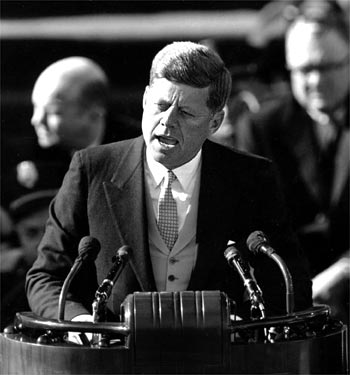
Because without me, some of the greatest sales people in the leadership world would just about be forgotten.   Without me, you’d not remember half the moving messages of an Obama  or  Reagan or the stirring words of Martin Luther King on the steps of the Lincoln Memorial, or the timeless candor of JFK at his Inauguration.   

Without me, some of the greatest sales people in the traditional selling world would just about be lost in the crowd.  Without me, you’d not have heard half the messages of Tony Robbins, Zig Ziglar or Jeffery Gitomer.

Without me, some of the greatest sales performances around us would just be of the ”Oh So Average” variety.  That guy in Florida, the one that landed the fortune 100 company, that would have been different.  That appointment setting guru, she wouldn’t get half the meetings set up with decision makers she does today without me.   

My name is Scripting.  And I am so misunderstood.

I am not overstating this.  Barack, Ronnie, Martin and John performed crafted messages.  They worked from scripts.  They had visions and dreams and goals to sell.   They followed that script; they wanted to; they needed to.

There is an unwarranted aversion some sales people and sales leaders have to being handed a script. 

You have to remember that a script is content crafted in such a way that a message is superbly told, a vision is passionately stated, or an experience is exquisitely orchestrated

No one who hands you a script is trying to script tone, genuineness, sincerity, passion and excitement.  You own that.  

No one who hands you a script is trying to “de humanize” you or the experience.  It’s the opposite.  That script, that process, that well crafted content is there to allow you to maximize your talents making the experience sound nothing like a script.   Learn from the masters and make the script invisible; that is what you own.   

The great sales people of the world, the industry or even in the building you work in wouldn’t dream of “winging it” or thriving off of improvisation; it just doesn’t work. 

Till next time,

Grow The Business.

Mark

From The Red Book

Standard


I carry a little red book around with me.  I write things in there that I like, I hate, I worry about or get excited about.  I bet you all have a little book or notepad too.

I looked through it over the weekend.   These strike me as things I want to write more about, support or rail against, or just plain share and do something more with. 

How about you?

  • I hate that human condition that drives online business reviews. Have a problem and you rant online no matter how little the issue.  Skews everything. Totally unfair.


  • I doesn’t matter much if you have the newest tools or software on your desk (like a new CRM for example) if you have no desire to change your routine or results to begin with. 


  • Listening is cool.  But If you can’t get your client to talk to you, what the heck is there to listen to?


  • Coaching is hard.  Coaching to stats, processes and order entry is easy vs. coaching to communication, selling and service skills.  That latter will grow the business and former will give you the chance to do it.   


  • It’s only a matter of time before what’s credible on the internet matters more than that something is in fact, on the internet.  And that time is very soon.


  • Twitter, Facebook, LinkedIN and all the rest haven’t changed us.  We have always loved, and needed a network of engaged, trusted friends and colleagues.   That need has always been there; it’s the tools that keep changing.


  • Glen Garry Glen Ross is simply the greatest sales movie ever and is Jack Lemmon’s best performance. The language is rough but the Mamet writing is priceless.


  • Ever notice on Mad Men how they have to sit the prospects down in the 60’s and explain in detail what marketing and advertising is in order to sell it?  Well we gotta do the same thing somehow these days when we sell online marketing.  It’s still kinda foreign to people.


  • Service Reps have the most satisfying job in the world.  You pros here know what I am talking about.


  • Open ended questions are so overrated unless you have some trust established; otherwise it’s just offensive. 


  • Adult learning theory continues to be disproved over and over again as weak.  It’s about “what” is being trained that matters, not the learning “style” of folks. ( Just as I suspected :))


Till next time,

Grow The Business.

Mark

Kill all Leads, Commissions and Sales Reps

Standard

I’m done with these three.

You should be too.  It’s tough because I worked them, fed my family with them and have been one for a lot of my life.

But I don’t believe anymore in what we call these three.

We need to change the names of these things.   It would do us wonders on so many levels.   Bad names can hurt what people think about you.  Bad names can hurt what you think about yourself.

And I’m done with that.

**

Leads.  Ugh.  Please, this is word is the worst offender.  “Give me the leads”.  “The leads stink”.  “I need more leads”.  The word “leads” just reeks of a faceless commodity. 

Change the word to “Needs”.  Every lead is really a person or people with a need.  And every Need has a solution or a way it can be filled.  A Need is customer focused.  A Need is something to rally around.  A Lead on the other hand, is blah.  A Lead is for us.  And “us” should not be the focus.

Think of what would change and how we might feel or do differently if:

Leadflow becomes Needflow. Lead Management becomes Need Management. Lead Generation becomes Need Generation.  Isn’t that better?

Commission. An ugly heinous word in sales don’t you think?  A word so commonly hated that many companies go out of their way to advertise that their sales pros are not paid on something so ghastly as to be called “commission”. 

Let the Commission Plan become a Mission Plan that “rewards” behaviors and results.  “Commission” the word, disappears and “Rewards” becomes the lead story.  “Rewards Pay” details not what portion of a sale price goes to a rep but what portion is added to the reps pay as a reward for behavior or results. Semantics?  Yes, my point exactly.

“Rewards” the word doesn’t sound like a “take” or “cut” or an “added cost” to a client ( or to the sales rep).   Rewards are awarded by the boss or the company for a mission accomplished well.

Think of what would change and how we might feel or do differently if:

Commission payout becomes Rewards payout. Higher Commissions become Higher Rewards. I work on Commission becomes I work on Rewards.  Client Commissions become Client Rewards.  Isn’t that better?

Sales Rep:  Ah….. the almighty fearful title.  For at least 60 years people have tried variations to hide or mask or those two words.  Nobody it seems wants to be called a Sales Rep.  No doubt you’ve heard or have been an “Account Executive” or a “Territory Manager” or a “Sr. Business Development Mgr” and on and on….. all the while being um…..well, a Sales Rep.

Truth is, the name “Sales Rep” sucks.  It has always sucked.

It’s not customer focused, it’s company focused.  It’s not broad sounding, it’s narrow sounding.  It’s got one of the most stereotyped images around of greed, neglect and selfishness.

The new name is simple. 

Help Rep.

Help.  It’s what any true sales rep really does anyway.  Help fill a need.  Help fix a problem.  Help make something better. Help you feel happy or organized or in control.  Help you grow your business. Help you run your business.  

Think of what would change and how we might feel or do differently if:

You walk into a Macy’s store and you talk to a Macy’s Help Rep, or walk on a car lot and talk to at Toyota Help Rep, or call Deluxe Corp and get a Deluxe Help Rep.

Maybe all the Help Reps fly in for a big Help Conference in Chicago called the Big Help.   Maybe there Help Contests for the Help Reps.  Maybe you get better and better at Helping vs. better and better at Selling. 

**

Pretty simple stuff these changes are to make.  And if we just do it I swear we could change a little bit of the world.

Till next time,

Grow The Business.

Mark

Assume He’s Earned It

Standard

That moment stayed with me all week while vacationing in Maine for a few days last week. 

He shuffled slowly, eyes riveted on the beach, his elbow tended by his middle aged daughter as he made his way to a table at the ocean front restaurant. 

He looked well into his 80’s or even into his 90’s, and I had a passing thought that maybe this beach was just one of many he’d seen in a lifetime as a civilian and perhaps as a Serviceman.

But it was what the younger gentleman dining alone said that struck me.  He broke from eating, stood and pulled out a chair for the elderly man and when the daughter mouthed “Thank you” the single diner said  “He’s earned it.”

“He sure has” the daughter beamed. 

The lone diner had no idea what this man had done to “earn it” and nor did I.  But the point is that there was an assumption that he had.

Giving help this lone diner so simply reminded me, was something not given out of pity or helplessness or ignorance or obligation but rather, out of assumed respect for the person. 

That’s a lesson we need to hear more of it seems to me.  There are some assumptions we need to change.

I grow worried that in business (and elsewhere in our lives) there’s a “prove to me” perspective too many of us take when meeting or working with people for the first time.  That we as sales people and managers and trainers sometimes approach prospects and existing customers, as well as new and veteran employees,  as people that need to earn the chance to be “worthy” of our time, our work, our humbleness and our help. That the help we give is a magnanimous gift on our part vs. help being given simply because it has already been earned.

It’s not that the old man in Maine may have served our country or done something great to “earn it”. Who the heck knows what he’s done but the presumption should be more often than not, that we are privileged to help people vs. the other way around.

  • Assume before calling on this prospect that she isn’t inexperienced just because her business is new but rather that she’s a 20 year business veteran now branching out on her own.   Assume that and you’ll do all the research required before you visit or call and be in a far better position to provide real help.
  •  Assume that this new hire class has collective sales experience like no other class before (as in this economy without a doubt they do).  Assume that and giving the “What Sales is Really All About” speech might change to real help in the form of a selling workshop fostering discussion about how to sell in a sketchy economy.
  •  Assume that the owner you are talking to also does most of the selling for his company.  Assume that and slamming in 4 product pitches or 3 trail closes isn’t the help you’ll give today. 


You can add your own new assumptions about each member of your staff or the customers in the territory you just inherited or the leader you now report to.  Just make sure the assumptions are that they’ve already “earned it” because chances are they have.

Till next time,

Grow The Business.

Mark

For the Blind, the Deaf and the One in the Back

Standard

Lia Oldham and her husband Ben teach theater skills to summer campers in Groton, Massachusetts.  

My son attends the 2 week camp and shared that Lia reminded them last week to always perform for the “the blind, the deaf and the one in the back”. 

Great advice.

Theater is a good training for much of the presentation work we do in sales, marketing and training.  Leaders too have been known to steal a few techniques from the stage to get their messages out well.

I did a fair amount of acting and directing back in the day and some of those stage lessons came roaring back having heard what Lia said about how to perform for your audience.  I’ve never been shy about sharing the value of having a theater background if you work in sales, marketing and training.  In fact, that experience is great to look for when your hire people in these spaces. 

Here are 4 stage techniques that specifically respect performing and presenting for the “blind”, the “deaf” and the “one in the back”.

For The Blind.  On the stage, performing for the “blind” recognizes the true value of what is being heard.  One stage technique is so important it’s often repeated three times;

  • Tempo, Tempo, Tempo.  Great acting (and great playwriting) result with stage performance sounding much like a song though this play is not a musical.  Stage directors obsess with tempo both to keep the play moving but mostly ensuring that the monologues and the dialogues that already have a cadence, a beat and a rhythm built in are executed well to add depth and energy to the story.  In business think Zig Zigler:  His Content is not the only instrument of his work; his voice is and that man can “sing”.  Have a listen here.   When you present or train, use these conscious thoughts of tempo to help you.
    • Tempo Up:  The training or the presentation should peak (often more than once).  Use speed and tone build ups.  Excitement sells.
    • Choruses; find the salient point and begin with it.  Repeat it throughout the presentation much like the chorus of a song.
    • Sentence structure:  Maybe 6 lines of a play or a presentation should for example, start with “You wouldn’t believe…” or “There will come a day..”.  It gives that cadence and rhythm to you work that helps the message stick.


For The Deaf.  On the stage, it’s about being Visually Deep.

  • Visually Deep:  Makeup on stage accentuates facial features to allow expressions to be seen more easily.  Expressions on a face as we know are deep windows to the soul.   Props too for an Actor can do the same thing adding depth to a character as props can tell a story without having to be explained; (think a cane, a worn briefcase – you get the idea).  In business it may make a lot more sense to use props than a lot of stage makeup (your call on that). Sales Guru Jeff Gitomer is a great prop user.  Consider for example instead of talking about or showing an image of a funnel in power point to explain a sales pipeline ( like we’ve all seen)  use a real plastic or metal funnel and fill it with ping pong balls.  Visual Depth helps those who are more influenced by what they see versus what they hear.


For The One in the Back.  On the stage it’s about Playing to the Balconies and Being Authentic.

The “one in the back” in Theater as well as in business can be the disinterested, the forced to attend or the non-believer.  Performing for those folks is tougher but no less valuable (especially when you can convert them into believers).   Those “in the front” in Theater and in business meetings and presentations often are already engaged, willing and believe so an actor or a presenter needs to remember that too much focus to the front rows may be missing an opportunity to “sell” to the whole audience.

  • Play to the Balconies.  In theater, it is “chest up”, “eyes up” and “look up”.   That physical approach brings the “back” in.   In Business it is the same.  In business do your best to look out and beyond the front rows even calling on folks in the back by name to draw them in. 
  • Being Authentic.  As Lia Oldham shared with my son and his theater campers last week, when you work hard at performing for “the blind” and for “the deaf”,  those from the back rows still may not see you or hear you that well but by golly, they will believe you.


Till next time,

Grow The Business

Mark

Going Soft

Standard

Soft data gets a bad rap.


“I’m not so sure, that report is full of soft data.”

“That Training is soft skills training; I need Training that is going to make a difference”.

I’ve heard those two phrases more times than I care to remember (including hearing myself say them a few times over the years).

The problem with the word “soft” is that in some cases it’s perceived as negative; that “soft” stuff is less important than some of the “harder” stuff. 

The longer I look around though, the more I realize I haven’t always thought of that right.

  • Hard data is great, except when you missed the soft data that is often customer opinion, employee engagement, social media perceptions and the next cable network pundit’s nasty opinion about your brand.
  •  Hard skills like system knowledge, order entry, product knowledge and compliance training are great, except when the soft skills like negotiation skills, engagement skills, sales skills, coaching skills and customer service skills disappear or take such a back seat,  that they never get trained.

We are all guilty of trying to make soft data and soft skills “harder” by trying to quantify them; assigning numbers, equations and decimal points to “soft” stuff in an effort to make it more like the hard stuff.

Problem might be that we are just not comfortable or confident with “gray”; and that we want, like the hard skills and hard data, for things to be more easily measurable and more black and white.  

But there are few wildly successful sales people whose soft skills are not often the differentiator in customer relationships.  And there are fewer superstar entrepreneurs, consultants, customer service reps, managers, teachers & marketers who don’t absolutely rock with soft skills or even in the use of soft data to get the job done.

So maybe, just maybe, the next time someone says to you “You’re going soft”, you should just say “Thank you”.

Till next time,

Grow The Business.

Mark

These Bags Should Not Fly Free

Standard

The airlines have a message for you.  Just leave your bags at home or you’re going to feel some pain.  And I think they got this one right.  Maybe we should start charging for bringing bags to work.

Better still, here are 5 bags Sales and Marketing Leaders should just leave at home.

  1. The bag of Costumes:  Too often sales and marketing leaders cover themselves with consultants or brand names to hide inadequacies or lack of confidence.  Work hard on finding the right answers, not buying them and then hiding behind them.
  2. The bag of Old Shoes:  Sorry, but your experience in closing techniques or dealing with objections is pretty worthless today. It’s the beginning of the sales process that is woefully under focused on today.   Leave that 80’s leather at home.
  3. The bag of “Best Employee / Best Practices” Manuals:   Problem with this belief is that the best employees of today are often great at Interruption Selling or Interruption Marketing which will be dead in about 5 years.  Bury that in the yard.
  4. The bag of Infinite Prospects:  The world is smaller now and if you try to bring the bag of dreams that there are thousands or millions of untouched virgin prospects; you’re wrong.  Pay your $25 dollars and bring the bag of Investing Differently in Current Customers.
  5. The bag that Won’t Fit:  You might be brilliant, you might be the answer.  But if you never take a moment to embrace a culture, a department, a division or a team ( even for just a few weeks),  before you try and change it, you’ll never quite fit.


Till next time,

Grow The Business.

Mark

Quit Worrying About Sales

Standard

Quit worrying about making sales, sales people.

Quit worrying about the sales results, marketing people.

Quit worrying about sales performance at all, leaders of any type.

Just stop.   

Sales are not the issue here.  Meaningful Conversations are the issue.  We don’t have enough of them.

  • Worry more about that in the 81 customers you spoke with today, you only had 9 meaningful conversations; conversations about helping them solve a problem or to make things better or something.  Move that meaningful conversation number to 19 a day and more sales will follow.
  • Worry more about the 43  Voicemail messages you leave everyday and that maybe just 3 customers on average ever returns your darn call.   Work on making those voicemails more compelling and interesting and get those returned calls to 10 and more sales will follow. 
  • Worry more about how to entice a customer to hear (just hear! not buy anything) about how your company is different or better or smarter than the competition.  Worry about that and worry hard, and more sales will follow.
  • Worry more about how and which ways to get meaningful conversations going customers than worrying about all the tracking sheets, the coaching conversations, the sales huddles, the campaigns, the contact plans and the emails largely focused on you and “where you are with the numbers” and “where you need to be”.  Instead of worrying about the what, worry about the how and sales will follow.
  • Worry more about fixing “the wrong problem” for if you do fix it –  it is the absolute worst thing any person or organization can do.  Fixing the wrong problem ( “I need sales!”) results in sales that cancel in a month and litter the prospecting landscape with your bad name and arm twisting tactics.   Sales is the “wrong problem” to worry about people, it really is.  

Meaningful Conversations on the contrary, are well worth your worry and mine.  

Till next time,

Grow The Business.

Mark