For the Blind, the Deaf and the One in the Back

Standard

Lia Oldham and her husband Ben teach theater skills to summer campers in Groton, Massachusetts.  

My son attends the 2 week camp and shared that Lia reminded them last week to always perform for the “the blind, the deaf and the one in the back”. 

Great advice.

Theater is a good training for much of the presentation work we do in sales, marketing and training.  Leaders too have been known to steal a few techniques from the stage to get their messages out well.

I did a fair amount of acting and directing back in the day and some of those stage lessons came roaring back having heard what Lia said about how to perform for your audience.  I’ve never been shy about sharing the value of having a theater background if you work in sales, marketing and training.  In fact, that experience is great to look for when your hire people in these spaces. 

Here are 4 stage techniques that specifically respect performing and presenting for the “blind”, the “deaf” and the “one in the back”.

For The Blind.  On the stage, performing for the “blind” recognizes the true value of what is being heard.  One stage technique is so important it’s often repeated three times;

  • Tempo, Tempo, Tempo.  Great acting (and great playwriting) result with stage performance sounding much like a song though this play is not a musical.  Stage directors obsess with tempo both to keep the play moving but mostly ensuring that the monologues and the dialogues that already have a cadence, a beat and a rhythm built in are executed well to add depth and energy to the story.  In business think Zig Zigler:  His Content is not the only instrument of his work; his voice is and that man can “sing”.  Have a listen here.   When you present or train, use these conscious thoughts of tempo to help you.
    • Tempo Up:  The training or the presentation should peak (often more than once).  Use speed and tone build ups.  Excitement sells.
    • Choruses; find the salient point and begin with it.  Repeat it throughout the presentation much like the chorus of a song.
    • Sentence structure:  Maybe 6 lines of a play or a presentation should for example, start with “You wouldn’t believe…” or “There will come a day..”.  It gives that cadence and rhythm to you work that helps the message stick.


For The Deaf.  On the stage, it’s about being Visually Deep.

  • Visually Deep:  Makeup on stage accentuates facial features to allow expressions to be seen more easily.  Expressions on a face as we know are deep windows to the soul.   Props too for an Actor can do the same thing adding depth to a character as props can tell a story without having to be explained; (think a cane, a worn briefcase – you get the idea).  In business it may make a lot more sense to use props than a lot of stage makeup (your call on that). Sales Guru Jeff Gitomer is a great prop user.  Consider for example instead of talking about or showing an image of a funnel in power point to explain a sales pipeline ( like we’ve all seen)  use a real plastic or metal funnel and fill it with ping pong balls.  Visual Depth helps those who are more influenced by what they see versus what they hear.


For The One in the Back.  On the stage it’s about Playing to the Balconies and Being Authentic.

The “one in the back” in Theater as well as in business can be the disinterested, the forced to attend or the non-believer.  Performing for those folks is tougher but no less valuable (especially when you can convert them into believers).   Those “in the front” in Theater and in business meetings and presentations often are already engaged, willing and believe so an actor or a presenter needs to remember that too much focus to the front rows may be missing an opportunity to “sell” to the whole audience.

  • Play to the Balconies.  In theater, it is “chest up”, “eyes up” and “look up”.   That physical approach brings the “back” in.   In Business it is the same.  In business do your best to look out and beyond the front rows even calling on folks in the back by name to draw them in. 
  • Being Authentic.  As Lia Oldham shared with my son and his theater campers last week, when you work hard at performing for “the blind” and for “the deaf”,  those from the back rows still may not see you or hear you that well but by golly, they will believe you.


Till next time,

Grow The Business

Mark

Going Soft

Standard

Soft data gets a bad rap.


“I’m not so sure, that report is full of soft data.”

“That Training is soft skills training; I need Training that is going to make a difference”.

I’ve heard those two phrases more times than I care to remember (including hearing myself say them a few times over the years).

The problem with the word “soft” is that in some cases it’s perceived as negative; that “soft” stuff is less important than some of the “harder” stuff. 

The longer I look around though, the more I realize I haven’t always thought of that right.

  • Hard data is great, except when you missed the soft data that is often customer opinion, employee engagement, social media perceptions and the next cable network pundit’s nasty opinion about your brand.
  •  Hard skills like system knowledge, order entry, product knowledge and compliance training are great, except when the soft skills like negotiation skills, engagement skills, sales skills, coaching skills and customer service skills disappear or take such a back seat,  that they never get trained.

We are all guilty of trying to make soft data and soft skills “harder” by trying to quantify them; assigning numbers, equations and decimal points to “soft” stuff in an effort to make it more like the hard stuff.

Problem might be that we are just not comfortable or confident with “gray”; and that we want, like the hard skills and hard data, for things to be more easily measurable and more black and white.  

But there are few wildly successful sales people whose soft skills are not often the differentiator in customer relationships.  And there are fewer superstar entrepreneurs, consultants, customer service reps, managers, teachers & marketers who don’t absolutely rock with soft skills or even in the use of soft data to get the job done.

So maybe, just maybe, the next time someone says to you “You’re going soft”, you should just say “Thank you”.

Till next time,

Grow The Business.

Mark

You Wouldn’t Think…

Standard

You wouldn’t think you’d get farther by doing things that feel weird or counterintuitive to sales, but you will.

  • You wouldn’t think you’d get farther by asking “Can you help me?” vs. “Can you tell me?” but you will.  People like to help people more than they like to serve people.


  • You wouldn’t think you’d get farther by fumbling your voicemail message than by delivering it perfectly, but you will.  People like real imperfect people more than real perfect people.


  • You wouldn’t think you’d get farther by not trying to close on every call vs. saying “Let me walk away and think about this” but you will.  People like people who listen and think more than they like people who just listen and solve.


  • You wouldn’t think you’d get farther by saying “Thank you for your business” vs. “Is there anything else I can help you with today?” but you will.  People more than ever; remember being appreciated rather than the check to see if their wallet was still open.


  • You wouldn’t think you’d get farther having a catalogue, a brochure or a handwritten letter in your tool belt vs. just landing pages, links and emails, but you will.  People like to do more than just surf sometimes; people also like to swim.


Till next time,

Grow The Business.

Mark

10 Things I Haven’t Mentioned….

Standard

Nice picture.  Screams charasmatic doesn’t it?

Yeah I have to work on that.   But I’ll start with a little more behind the picture today.

I write about what could or should be done in the worlds of sales, marketing and training.   I’m not shy either about having a stand on a few life lessons too.   I’m OK with that. 

So, today here are a few things you won’t read about me in my About pages and that might offer an element of

Well, I have no idea really.

All I do know is that when I read a couple of posts like this one here by blogger Lisa Sonara Beam, who got the idea from Corbett Barr, it helped me. 

Not sure how it helped but it did.   When I read their posts or their tweets now I guess I feel a little more something.  Maybe it was because a little more was laid out there on a limb with the content of the blog.  It was a little more transparent maybe. 

I think too that they feel a little more something when they write having shared stuff that may not have been that easy to share.  Seems like a win- win.

So I’m stealing shamelessly.

1.  My father was a police officer and my mother was a nurse.  He worked days and she worked nights and then she worked days and he worked nights… You get the idea.  Though 4 sons and a daughter, none of us chose either profession as a career.  I feel kind of bad about that.    

2.  Toby W. doesn’t know I love him.  8 years ago he was kind enough to stop me in the hallway and say he knew I was desperately looking for an apartment and that there was one available in the next town over.  7 days and 75 miles later, I moved in, then went to the local church one hot day that summer, saw the love of my new life cantering, married her 7 years later and am still the Luckiest Man in The World.   Toby visits the office every once in a while (he’s a field sales guy), but he has no idea why I stare at him so long, often saying nothing.  He knows now.  I love you man.

3.  I was always afraid of dogs.  Till I got one.  Now I am just a little afraid.

4.  I went to college as an Engineering Major.  Oh yeah, a 5 year program with the last 2 years supposed to be at Notre Dame.   But in my sophomore year at Stonehill College when I started digging into the trash bins in the computer lab looking for hints of how to just start my computer programming assignments,  I realized this ain’t for me and changed majors right quick.

5.  For nearly 5 years I drove 4 hours a day commuting to and from work.  75 miles each way in some of the worst traffic imaginable.  Longest round trip? 9 hours.  You do what you need to do for your family, you discover books on tape and learn first hand that you never travel in the far left lane; ever,  it’s always the slowest.  Stay in the middle lane my friend.  Always.

6.  Writing is the Great Clarifier.  Writing adds more depth to my thinking, strategizing and execution without a doubt.  It’s not something I do in addition to my job.  It is something I do to get the job done.  Hard to explain, but true.

7.  It’s the little things that drive me crazy.  I’ll use cuss words that would make Capt. Quint wince (he’s from the movie Jaws for you youngin’s) when that razor falls out of the cabinet again or I am stuck having to open up a cereal package (impossible).  If I lost an arm in a power saw accident however, I assure you that you wouldn’t hear a peep out of me.  Seen it before; big stuff happens and I’m cool as a cucumber, little stuff happens and the good Sisters at St. Catherine’s would ditch the ruler and grab a 2 by 4.

8.  A 30 pack of Bud Light saved my life.  Between his second and third murder over the span of 5 days, this guy  walked up to my car window while I tried to pull out into traffic in Meredith, NH in 2001.  He leaned into my car window and asked “can I get a lift to the print shop just down the road?”.  His hand heavily resting on the door frame and his head now nearly touching mine, I just glanced at the 30 pack of Bud Light on the passenger seat, shrugged and said “Hey man, no room”.   I  then hit the accelerator harder than I planned and drove off; something just wasn’t right about him.  2 of the 3 guys he killed I found out later, had given him a lift just like I almost did.    Maybe this is why I still love beer so much.

9.  I love my Mom’s music .  On my IPod, I’ve got everything from Jock Jams to Broadway musicals to Mozart’s Requiem to Police (Live!) to John Denver to a dozen full length Biz books.  So what.  Everybody has a wild mix of music.  My favorite Playlist is the one I made for my Mom 2 years ago.  She’s 77.   I burned 2 CD’s for her of her favorite stuff ranging from Church hymns to Paul Simon to Les Miserables and I know I listen to it more than she does.

10. I know nothing about cars, babies, electronics, weapons, meat that is anything but well done, astrology, soccer, tennis and fishing.  Conversely, I know way too much about backyard sports (including dozens of made up games), football, books of lists, scrabble and cemeteries.  So there you go; that about evens it up.

Till next time,

Grow the business.

Mark

A New Sales Model

Standard

Have a new sales model for you.  Don’t fall asleep just yet, you should care about this.  It’s simple but different.   Different is good.  

A sales model for our purposes here is the process or the steps you take to make a sale.   The process you trust, the process you live by.   Sales models are important; they are a roadmap so to speak, of how to do what you want to do, which is of course, to grow the business.  

You use sales models all the time.  Want to go out on a date with someone?  Here is an age old popular model to get that done.

Prepare / Search / Impress / Close

First you go and Prepare (look sharp, take a shower that day (you can do it!) then go Search ( scope out the lounge, the beach, the bake sale – whatever) then Impress ( sound wicked funny/ smart/ nice and get your favorite pick up lines ready like “Excuse me do you have a tissue? I was just listening to Susan Boyle on my IPod“) and finally the Close (“I have a hankering to watch The Notebook again, would you like to join me?”)

Traditional Sales models have been around forever too.  A typical sales model is something like:

Rapport /Discovery / Present / Close.

That is to develop a connection, ask good questions, make a product offer and then close the sale.  You get it. 

I don’t much like the traditional sales models.  Not for us.  Not for anyone really, but especially not for us. 

Here is a new sales model

Time / Trust / Create Need / Discover / Advocate / Close / Support 

Looks complicated?  It’s not.  Don’t worry about the last 4 here (discovery, advocate, close, support), those are traditional and something to detail another day.  Just think about the first 3; Time, Trust & Create Need, those are the “New” in this sales model versus traditional ones.  

The New Sales Model is front loaded like never before.  It needs to be. 

The very beginning of any sales process has been underwritten and underplayed for 50 years.  Getting attention, earning the right to talk with or market to folks wasn’t like then what it is today.  It’s different now; how you really start or really begin is the most important part of the sales process.  Do that well, superbly well and the rest of the sales process is easy.   That’s why we need to change the traditional model.

Dig up any sales training or sales models from today or yesteryear and you’ll find almost nothing on getting salespeople to see TIME as a critical commodity that must be purchased from the prospect before anything happens.

Search Google and look for all the TRUST training and theory out there for sales forces of the world; you’ll find some for sure, but mostly you’ll find a lot of superficial blather about “building rapport” or “forming relationships”.  Used to be a hearty handshake or some smart product knowledge or “my office is down the street” was trust enough to get the sales process started.  No more.  Nobody’s company has that kind of infallibility anymore.   It’s take a lot more and a lot different now to earn the Trust you need today.

Instead of CREATE NEED help, you’ll find a gazillion sales theories and courseware around “finding needs” or “finding pain points”.  It’s as if the prospects and customers of the world are walking about “injured”, “lost” or “clueless” about themselves anxiously waiting for a company or sales rep to come in diagnose and prescribe medication to fix the pain.   I don’t think so. 

Sales Theory in large part is not keeping up with the times.    Much else is different in the marketplace than when some of the biggies rolled out their iconic sales models (companies like Wilson Learning, Dale Carnegie, Huthwaite and the like).  What’s changed?

    Everybody has gotten smarter; your customers in a couple of clicks can get a lot more info and now need a sales rep to be smarter than them in different places, in more Trusted places.

    It’s harder to be unique.  Companies are changing and entering new spaces but consumers still have lots of choices (more than ever) for a provider.  It’s like Malcolm Gladwell in his book Blink who said essentially that “if given too many choices, then nothing happens”.   Create Need my friends.

    Used to be you could be assured your customer “listened” to you, now they are in control.  Their Time and attention is precious and they know it- YOU know it.   Marketing is changing radically to respect this; Salespeople need to too.

This model is your map to better success.    This model needs our attention, our rallying around, our design and planning around.

Old sales models are for old companies and old sales reps in old marketplaces.   Don’t believe for a minute we are old.  Nope, we’re new, brand new.   We have to be. 

Till next time,

Grow The Business.

Mark

Want more fodder for thinking about the new model?   Take note..

  • Seth Godin gets totally the “time” piece of the model; so read his book Permission Marketing
  • Gitomer and Steven Covey Jr. (the son, not that father) get the “trust” piece fairly well so have a gander at Trust by Gitomer and Speed of Trust by Covey Jr. 
  • Lastly go here  http://www.icrinc.com/web/videoportfolio.php  Scroll down to Easton Bell Sports who essentially base their sales philosophy on “creating need”.  Love it 

Forest Quandaries

Standard

“If a tree falls in the forest and there is no one there to hear it, does it really make a sound?”

I get the riddle, I really do.  But I honestly don’t care much about the darned tree and if it makes even so much as a peep.

I do have some things in that forest I do care about though.  You should too. 

  • If you completely rebrand yourself but there is no one there to notice, does it really make a difference?  Think hard about inviting more people into the forest.


  • If you spend hours learning about a product but no customer ever asks you a question about it, will you ever sell anything? Grab some stump and tell somebody what you know in an interesting way.  


  • If you spend time to get smarter or stronger but never feel a bit stretched or sore, will you ever be either smarter or stronger?  Lift some heavier deadwood.


  • If you want to live in the best tree in the forest but never have a plan to find it, will you ever be so lucky to stumble upon it?  Get a knife and carve out a plan.


  • If you post a blog in the forest and there is no one there to read it, does it really matter?  Write something so interesting that people care to hike in once in a while. 


Till next time,

Grow The Business.

Mark

Mullet Over

Standard

mark mullet years

Sales and Dating just don’t mix.  But when they do, there are lessons to be learned.

Tonight you are super sales guy Rock Ledger.  You are single and in a bar.  Good Times.

And lucky you, it’s also 80’s night.  This feels good.  This was your time.  This was where the Rock Ledger legend began.  So even though you are not much of a dancer, it’s flashback (and Flashdance) fever tonight so you have got it going on!

You Rock Ledger, you super sales man, you  did your pre – party research, and prepared well for this 80’s night.   And holy leg warmers, you spy someone you think you’d like to talk to.  You remember her name is Tiffany.

Excellent.   Time to make your move.

A bit sweaty now because you just had to break out some moves to the blaring tune Safety Dance, you are comforted knowing that the rusty Aquanet hairspray you found buried in your dresser drawer (literally from the 80’s you suspect), had enough juice to keep hair  securely shaped into that “oh so cool” Mullet.  You amble over to Tiffany in your now ill – fitting Members Only jacket and say:

“Well Hello there.” 

“Well Hello to you.”  She says.  She looks at you coyly.  She’s curious.  You look back.   An awkward pause ensues, but you are ready.  Conversation is your game.

“I was wondering” you say, (knowing full well how good your John Stamos Full House Mullet looks)….  “Are you happy with growth of your family or are you just looking to keep the family you have?”

 “Whaaaat?” She cries.

 “No, I ‘m sorry.  What I meant was, how happy are you recently with things?  Is life going well for you?  Are you really happy with your current boyfriend or do you want to be happier?”

“Listen Skippy, I barely know you..”, she says. (And of course you’re thinking that “Skippy” was Michael J Fox’s dorky friend on Family Ties and you definitely do not, look like Skippy)

“Ok I’m really sorry this is not starting off well.  All I want to know is why can’t I have a serious conversation with you?”

WHAP!! Your face, ego and hair sprayed Mullet all get whacked at once.  Face and ego bruised, the Mullet surrenders too and snaps back from whence it came.  Your 80’s night is now over.

**

Mildly entertaining?  Sure.   But Rock Ledger’s conversation with Tiffany is not that much different than some of the early conversations we have with our business customers and prospects.  Though we are well intentioned, many of us launch into some very deep questions right off the get go.

We are quick to ask these deep and frankly quite “personal” (especially when speaking with small to med size businesses) questions that while your customer won’t likely literally “slap” you like Tiffany did, they sure as hell might want to.

Think about what many of us ask after a few moments of introduction or in our first meeting.

  • “Are you focused on growth or maintaining your customer base?
  •  “How is the economy treating you, are you guys doing OK?”
  •  “Are you happy with your current supplier?
  •  “What’s the biggest challenge you are facing this year?
  •   “I want to understand your needs better, so I have some  questions..”

Should we be asking these questions of our customers?  Yes we should.  But should we take some time to buy the prospect a metaphorical drink or two and build a little trust and value about ourselves or our company first?  Prove we care about really helping the prospect first?   You bet.  Tiffany would have appreciated it.

This doesn’t have to take too long.  It can take as little as a first date but more often than not (especially today in this low trust competitive environment), you shouldn’t ask these types of “personal questions” till you’ve had a few dates or you might get whapped.  It’s tough, the pressure is on.  You need to perform.  Rock Ledger wants to close the deals right quick too, but you saw what happened to him.

You can dance if you want to.   And I suggest you do.  But dance the long dance version please first.

Till next time,

Grow the Business.

Mark

What’s Your Trigger?

Standard

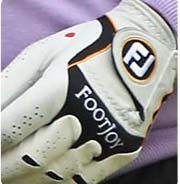
Louis Oosthuizen won the British Open Sunday.   And a little sharpied red dot on his golf glove had something to do with it.

That little red dot on his hand was what he looked at before each and every shot.  That glance, that focus on the red dot helped get him “into the zone” and to “dispel the distractions”.   It was and is his trigger.

  Triggers, as any sports person knows, are a big deal.   They can be a stare, a move, or even a thought but regardless of what they are, it is what they do that matters.   And for Louis, that trigger was something that helped him execute in a very tough job under a ton of pressure.

What’s your trigger?

Playing sports, mine was a tap of my left foot before the pitcher began his wind up.  My younger brother (a much better player) would slam his bat to the plate at the beginning of each at bat; a trigger that worked for well for him (and as an added plus, intimidated the opposition). 

But what’s your trigger at work?  We do great things.  We need to perform under pressure and just like Louis we’ve got to execute difficult tasks well (often repeatedly) without much room for error.

For some folks it’s a phrase or a word they say to themselves before the presentation starts, before the call comes in, or before they push that door open that says “no solicitors”.  For other folks it’s forcing that image of a mentor or a respected boss into your head, or it’s a quick look at your kid’s picture on your desk and the thought of who you are really doing this for.

But more often than not, I’m guessing there isn’t a trigger at all.

More often we just do.  We think hard and we work hard for sure, but I doubt many of us consciously while at work have a “trigger” that helps us get “into the zone” or “dispel the distractions”.  

I think we should find one.  One that helps you instantly lock into that zone.   Maybe it’s a head nod with your eyes closed for half a second as you hear the words or see the face that is your trigger.  Maybe it’s something you wear on your wrist you can cast a glance at 15 times a day. 

I have one.   I have a trigger.  I’ll admit I’ve gotten away from using as often as I once did but Louis inspired me to bring it back.  And yesterday (Monday) was the first day I employed it throughout the day in a quite a while. 

Grew the damn business I did.

Till next time,

Grow The Business.

Mark

These Bags Should Not Fly Free

Standard

The airlines have a message for you.  Just leave your bags at home or you’re going to feel some pain.  And I think they got this one right.  Maybe we should start charging for bringing bags to work.

Better still, here are 5 bags Sales and Marketing Leaders should just leave at home.

  1. The bag of Costumes:  Too often sales and marketing leaders cover themselves with consultants or brand names to hide inadequacies or lack of confidence.  Work hard on finding the right answers, not buying them and then hiding behind them.
  2. The bag of Old Shoes:  Sorry, but your experience in closing techniques or dealing with objections is pretty worthless today. It’s the beginning of the sales process that is woefully under focused on today.   Leave that 80’s leather at home.
  3. The bag of “Best Employee / Best Practices” Manuals:   Problem with this belief is that the best employees of today are often great at Interruption Selling or Interruption Marketing which will be dead in about 5 years.  Bury that in the yard.
  4. The bag of Infinite Prospects:  The world is smaller now and if you try to bring the bag of dreams that there are thousands or millions of untouched virgin prospects; you’re wrong.  Pay your $25 dollars and bring the bag of Investing Differently in Current Customers.
  5. The bag that Won’t Fit:  You might be brilliant, you might be the answer.  But if you never take a moment to embrace a culture, a department, a division or a team ( even for just a few weeks),  before you try and change it, you’ll never quite fit.


Till next time,

Grow The Business.

Mark

Thank You Tom Watson

Standard


Caught Tom Watson’s likely last walk over the historic stone bridge at St. Andrew’s yesterday.  A class act Tom is.  And what a thrill he gave us last year at the British Open. 

Here’s a look back.

Originally published 7/20/09

***

Thank You Tom Watson

Years ago I heard someone say the difference between soap operas and sports is the “audience” that watches them.   At first pass, some might think the point is that one gender likes soap operas or sports more than the other but the point really is that soap operas and sports are so very similar.

In both lie often incredible and transfixing stories. 

Susan and I couldn’t take our eyes away from Tom Watson’s golf performance at the British Open this weekend.   In the space of 48 hours, we ran a gamut of emotions sitting in our living room and watching this story play out.

And I am so thankful for that. 

As I write this a few hours after he lost in a playoff to Stuart Cink on the final day of the Open; I realize how lucky I am to have invested here emotionally.   At 59 years of age nearly 25 years removed from his last major championship, Tom held the golf world ( and I suspect a whole lot of new weekend TV converts) captive.   Could he be the oldest man to win a major championship?  Could this gentleman, this statesman for the game sit atop the golf world once again and live for real, an improbable heroic story?

There was chest tightening nervousness in my living room as we watched him tee off on hole after hole on Sunday.  At times we refused to watch some of his short putts (his long time nemesis) for fear of either seeing him miss or like a jinx, by watching we might just influence that putt in a bad way.  We literally jumped and cheered when he sank the few birdies he made Sunday and there were tears when we realized he was going to win… and tears again when we realized that he wouldn’t.

It was exhilarating.  It was exhausting.    

I don’t think it matters much whether your deep emotions come out though a fictional story or a real life story, rather, that they just do.   It feels good this collection of intense feelings, a bit like a mental cleansing.  It feels good to have all those emotions across such a broad spectrum, be let out.

And who knows, maybe going for a ride on a wild emotional story once in a while has other benefits too.     Not for nothing, but after watching that tournament; I went downstairs and had one of the best workouts I’ve had in a long time.  I then mowed the lawn in some of the most artistic patterns ever and I swear at my grill, the beer was colder and the cheeseburgers tasted better than they have all summer. 

Thank you Tom Watson.

Till next time,

Grow The Business.

Mark