These Bags Should Not Fly Free

Standard

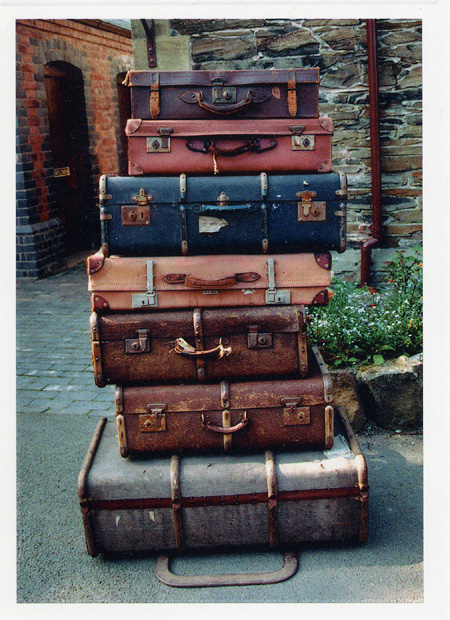
The airlines have a message for you.  Just leave your bags at home or you’re going to feel some pain.  And I think they got this one right.  Maybe we should start charging for bringing bags to work.

Better still, here are 5 bags Sales and Marketing Leaders should just leave at home.

  1. The bag of Costumes:  Too often sales and marketing leaders cover themselves with consultants or brand names to hide inadequacies or lack of confidence.  Work hard on finding the right answers, not buying them and then hiding behind them.
  2. The bag of Old Shoes:  Sorry, but your experience in closing techniques or dealing with objections is pretty worthless today. It’s the beginning of the sales process that is woefully under focused on today.   Leave that 80’s leather at home.
  3. The bag of “Best Employee / Best Practices” Manuals:   Problem with this belief is that the best employees of today are often great at Interruption Selling or Interruption Marketing which will be dead in about 5 years.  Bury that in the yard.
  4. The bag of Infinite Prospects:  The world is smaller now and if you try to bring the bag of dreams that there are thousands or millions of untouched virgin prospects; you’re wrong.  Pay your $25 dollars and bring the bag of Investing Differently in Current Customers.
  5. The bag that Won’t Fit:  You might be brilliant, you might be the answer.  But if you never take a moment to embrace a culture, a department, a division or a team ( even for just a few weeks),  before you try and change it, you’ll never quite fit.


Till next time,

Grow The Business.

Mark

Easy Still Needs To Get Easier

Standard

Fax machines ain’t dead yet.   Especially in small businesses.  But of course it’s not the machine itself that matters; it’s what it still does really well that does.   I got a neat lesson about that not long ago.  

Last month I had the luck of sharing lunch with one of our operations leaders while on a visit to our Canadian facility.    He had just conducted a tour of his area that morning and was animatedly recounting the response he gave to the question about why there is still a healthy volume of faxed orders from small businesses.

“Here’s why…” he said and deftly picked up an imaginary order form, proceeded to circle an imaginary box, write in an imaginary quantity and then stick it into an imaginary fax machine. Done.

Sweet.  Simple.  Quaint even.  So Easy.

And that is the point.   For a small business, it is easier (and sometimes a heck of a lot easier) to stick with the old than go with the new “Easier Ways”.

Let’s take an online reorder of a product.  Maybe it’s new name plates, or business cards or truck parts or whatever.   And think about the online ordering process experience from just about any company.

In this typical small business you’ve got to find a computer you can use to place this order (it’s not like everyone at a small business has one readily available)…. open up a Browser….find the Vendor…. get past the “Sell” area landing page and find the Existing Customer area (you know up at the top right somewhere…. in the tiny print)….. find that Sign in button….. Enter Email address…. Login name… remember or dig for, the darned Password….. Place the order…. Verify…. Validate…. etc etc.  Is it simple? Yes, for some.

But some find it “easier” to grab the reorder form that was mailed to them, circle a spot, write in the quantity and fax it. 

Others find it easier still, to remember nothing at all other than the bloody company name, pick up the phone, talk to a human and place a reorder.  

This isn’t a knock on web plays for small business; this is a reminder that “Making it Easier” is a critical factor for small businesses.  And always will be.

Warrilow (a leading researcher of small business) often reminds us that the majority of small businesses are not early adopters of technology but I’d contend that is as much about how easy (or not)  something new is to do versus how easy it is to do today as anything else- especially for small business.

So two easy questions to ask yourself when you are trying to provide support and solutions for your small business customer;

  • How can your recommendation “make things easier” than the current product and/or supplier in use today?  Write down those answers for your favorite products and embed them in your contacts and conversations.


  • Is the reason a SB won’t budge or buy really because the solution will require “more work” on the clients’ part than they do today? (Even if just in the transition?)  If yes, remove the work!   Invest in whatever it takes to do this; the return you get versus price obsession or proving ROI will be significant.


Till next time,

Grow The Business.

Mark

5 New Rules For Book Reading

Standard

After a recent conference meeting, I offered to send out a particular book to any sales leader who wanted one of my remaining stash.  Many folks replied requesting the book and my guess is that others used the link I provided to purchase the book at Amazon. 

Super.  I love people who read business books.  They get it.  

It was a little odd though.

Some sent notes saying things like “Please send the book and I’ll pass it on to each leader” or “I’ll send back it back when I am done with it”.  These notes are from people wanting to invest in themselves and are very well intentioned for sure.  I’m convinced though, that our “Library” experiences and our “Textbook” experiences in school have fostered the belief that all books should be treated as we once were instructed to, or as we might treat fiction books today; That books are to be read and read only; That books are to be passed around, or resold or covered in protective paper and never, ever to be written or doodled in.  

It’s time for the old rules to go.  I don’t think those beliefs suit us well when applied to essential books.  These types of books I’m talking about can change your life at work and at home.   

Here are 5 new rules to go by.

1) Never Share:

It’s yours.  You wanted this book to read.  You will, if you do it right, write in this book including in the Kindles of the world.  In a mad rush some day in the future, you’ll lunge for your bookcase because you know that there is this book or this author who has that idea  and you need to read it again to move this effort forward or make something happen.  Make sure that this book is in your bookcase or on your desk when you need it.  Recommend a book?  Yes.  Share a book?  Never. 

2) Never Borrow:

Never borrow one of these types of books from anyone.  Not your colleague, not your spouse, not your friend.  Borrow means you have to give it back.  Borrow is a complete waste of time.  Think you can read a non-fiction critical book and remember the 10 essential themes or tools it teaches?  If you can, welcome to the tiny percentage of folks with a photographic memory.  The rest of us need to skip the “borrow” approach to books.  Never borrow.  Leave that to the fiction and fun books. 


3) Always Write In and Highlight In Your Book:

Have a pencil and your favorite color highlighter in hand whenever your read one of these books.  If you are into the electronic readers be careful; you have to get the ones that easily allow you to write, highlight and retrieve (and Nook ain’t one of them).  Books are a collection of moments from great teachers, researchers and leaders and like anything else, offer some moments that are better and more striking than others.  Highlight them or write a note next to that moment.  Your books should be a complete mess of color and notes.  It makes it that much easier a year later or 10 years later, to pick up this book and find what you loved about it the first time you read it.


4) Spend Money:

Spend at least $60 of your own money every month on books.  About a $2 dollars a day on ways to be better, be happier, be smarter or be more of whatever it is you want to be.  You decide if you are worth it but if you are reading this, my guess is that you are.  


5) Re-Write the Best:

If you take the time to read these types of books (and you must), do so with a small notebook that you’ll never lose (I use a small red moleskin notebook).  When you read, there are concepts that on occasion will make your jaw drop, your eyes widen and your breath quicken as within this book and on this page, a brilliant perspective screams out to you.  These thoughts are so profound that a note or highlight just won’t do and in fact, you should carry it with you. Transfer that tremendous thought to your small notebook.  Carry it with you and look at it often. 

Till next time,

Grow The Business.

Mark

Quit Worrying About Sales

Standard

Quit worrying about making sales, sales people.

Quit worrying about the sales results, marketing people.

Quit worrying about sales performance at all, leaders of any type.

Just stop.   

Sales are not the issue here.  Meaningful Conversations are the issue.  We don’t have enough of them.

  • Worry more about that in the 81 customers you spoke with today, you only had 9 meaningful conversations; conversations about helping them solve a problem or to make things better or something.  Move that meaningful conversation number to 19 a day and more sales will follow.
  • Worry more about the 43  Voicemail messages you leave everyday and that maybe just 3 customers on average ever returns your darn call.   Work on making those voicemails more compelling and interesting and get those returned calls to 10 and more sales will follow. 
  • Worry more about how to entice a customer to hear (just hear! not buy anything) about how your company is different or better or smarter than the competition.  Worry about that and worry hard, and more sales will follow.
  • Worry more about how and which ways to get meaningful conversations going customers than worrying about all the tracking sheets, the coaching conversations, the sales huddles, the campaigns, the contact plans and the emails largely focused on you and “where you are with the numbers” and “where you need to be”.  Instead of worrying about the what, worry about the how and sales will follow.
  • Worry more about fixing “the wrong problem” for if you do fix it –  it is the absolute worst thing any person or organization can do.  Fixing the wrong problem ( “I need sales!”) results in sales that cancel in a month and litter the prospecting landscape with your bad name and arm twisting tactics.   Sales is the “wrong problem” to worry about people, it really is.  

Meaningful Conversations on the contrary, are well worth your worry and mine.  

Till next time,

Grow The Business.

Mark

10 Bold Sales Predictions

Standard

I keep having these visions of the very near future.   And if you want to rule the sales world, it would help if you knew what was coming.

Get ready. 


  1. Knowledgeable sales people will be less valuable:  Instead the sales people whose expertise in communication skills and customer experience skills will rule the sales world.   It won’t be what or how much a sales person knows that matters much anymore.   Customers and prospects can get so much product knowledge and specs with a wee bit of research online so when they talk to you and work with you in the future, you’ve got to blow them away. 
  2. Salesperson Reputation Management will be a must.  That CEO will Google a lot more than your company and will look for you on Facebook and Twitter and LinkedIn before she agrees to meet with you.  Best to remove the silly ball cap off your head in the photo next to your posts.  Cold calling?  Got thru to the decision maker?  Well in the future, he’s reading your twitter posts inside a minute while you’re trying to set an appointment with him.  Best to make sure he’s not reading your opinion of Miley Cyrus.
  3. The DIY (Do It Yourself) play will be DOA.  In B2B selling, Do It For Me (DIFM) will be the lead story again.  Businesses who early adopted the DIY way ranging from services like do it yourself online marketing products to HR software products are not near the bulk of the populace.  Sales organizations who get that a customer wants a “Help me get this done from A to Z” approach will be sales organizations that do the best. 
  4. Research Customer history? Not so much. Knowing a single customer’s history with you will be less and less valuable.  If we are honest, a client’s individual history has been a poor predictor of future tastes and buying motives anyway, so don’t obsess over CRM enhancements.   Instead, get obsessed with tapping into like customer industry market trends and as Wayne Gretzky says, make sure you “skate to where the puck will be”, not where it is, (or worse, where it was). 
  5. Readers Wanted:  Hiring sales people who don’t spend any of their own time self developing or let’s face it even reading will be over.  The sales arena methods, processes and tools are more fluid than ever.  Sales folks who wait to be spoon fed development just won’t make it anymore. 
  6. Hunters and Farmers will fade away:  But there will be Builders.  Client loyalty continues to wane.  Nothing like the worst recession since the 30’s to shake customer trust too with everyone including suppliers.  The Builder sales person will scout new locations to drive leads in new and different ways for sure but they also need to lay the foundations and stick around long enough to cultivate the clients.   Do It For Me lasts well past signing on the dotted line and hand offs in a low trust world will be sales killers. 
  7. Micro Networking will be your edge.  Associations, BNI and Trade Shows will still be around but it’ll be a mention of you in a blog or a connection in LinkedIn that will get you that meeting with the CEO.   These micro networks are a direct response of low levels of trust in the marketplace and it’s in these relatively tiny networks that sales people will flourish.
  8. Trust and Credibility training will grow.  Sales people and sales organizations will heavily invest in content that will focus on building trust.  Dollars will be siphoned away from negotiation skills, discovery skills, questioning skills and closing skills.  Good.  The sales challenges of the future will be creating enough credibility to first be heard. 
  9. Pay to Play Appointments will be the norm.   It’s happening already.  Used to be incentives were the tools to close sales.  In the future it will be just as common to use incentives to get appointments: to be heard.  Customers know in media drenched world; that their time is valuable; their attention is valuable and you’ll need to pay for it. 
  10.  The Gap between Sales and Marketing will close.  Company brand, integration, integrity and touch points are growing in importance and volume.  Sales will need to become a consistent extension of Marketing and Marketing will need to rely more heavily on the humans to create and manage the brand.


That’s what I’m seeing.  What do you see?

Till next time,

Grow The Business.

Mark

WWSBD?

Standard

What Would Small Business Do? 

Sometimes the best advice to get more sales comes from the very customers you sell to.  

And I bet some of us sell and support Small Businesses.   Small Businesses are great teachers.

Let’s say a small business has a chance to have a very strong sales finish to this month, a chance to deliver results like never before.   Maybe you or your sales folks are in the same boat.

And let’s say it’s a big deal for this small business. The pressure is on.   Maybe their bank needs to see some strong performance before they’ll agree to extend more credit the business needs.  Maybe this small business is trying to attract investors as the owner knows he wants to open 2 more locations.  Maybe this small business is just trying to prove to itself and its employees that they are going to make it out of this recession healthy and strong.

We could learn a lot from what a small business would do with this opportunity.  Heck we have a business to run and sales to make this month too.

What Would Small Business Do? 

All Hands on Deck:  Grandma made the trip down from Maine to work the prep tables.  The high school kids got out of school last week (thank god) so they are both here to help at the lunch counter.  For us it’s simple; Be here.  Be present.  If you have folks who do the training, the accounting and the marketing, whatever- get them out and into the store and on the floor or in the field: everyone needs to focus on getting the cash register to ring.  Do whatever you can do.

Be Extra Nice and Extra Helpful:  “Pay attention to everyone that walks in today!  Smile, offer to help, make eye contact!  Don’t let anyone back out that door without saying hello!” the owner said before the small men’s clothing store opened.  You see he knows this week is a week you can’t just “wait” for sales to come to you, you have to make them happen.  For us, it’s the same.   Smile on that phone.  Listen real closely.  Get those calls before they sit for even a second in queue and don’t you dare let a voicemail go unreturned for more than an hour!   Amp up your “thank you’s”, your apologies, your energy, your tone and your passion.  Make it happen; don’t wait for it.

Have a Special:  Cousin Billy always has the good ideas so he went out front and changed the sidewalk sign to an auto detailing offer good for only this week.   That’ll draw them in!   You have to get creative and get attention sometimes to nail those dollars late in the game.  For us at we have those “specials” all the time; – tons of them.  It’s up to us though to get that sense of urgency out about them. “The month is almost over for this one so I’d recommend….”, “I don’t usually see this kind of offer, so my advice is to take advantage of it…”.  You get the idea; make this week, this month, a big deal for the specials you have going. 

Work Harder:  This family owned shop knows a lot about this already but this week they know it’s going to have to be at another level.  They’ll stay later and restock the shelves of this little grocery outlet every night instead of every other.  They’ll get in earlier and rather than wait till July, set up the outside produce display this week and maybe attract a few more folks to stop in.   For us at  working hard isn’t new but this week we know that that 40th  incoming call has to sound to the customer, like it’s your first call if you want to make a difference.  We know making 10 more outbound calls from 4:30-5:30pm than usually do or 3 more customer visits per day this week could make the difference.  We understand it’s a full court press of effort and yeah, it’s gonna be exhausting.

Till next time,

Grow The Business.

Mark

Pretend You Have No Choice

Standard

When we go to a new product training we have no choice but to learn because if we don’t, we won’t know the prices, the models, the features or the options available.  And we’ll sound unprepared and unprofessional in front of the customer.  

When we go to a systems or CRM training we have no choice but to learn because if we don’t, we won’t be able to enter an order, research customer history, look up a price or navigate anywhere.  And we’ll sound unprepared and unprofessional in front of the customer.

But somehow when we go to a sales skill training, or a negotiation training, or a customer service training, we think we have a choice to learn or to not.  Somehow because our system won’t lock up or we don’t fumble for the right pricing or we always find the history we are looking for, we think this kind of training is optional to apply.

Truth is if we choose not to learn and apply in these types of trainings we will sound woefully unprepared and unprofessional in front of the customer.

More and more today, what you say to a customer and how you say it is critical to differentiating you and your company from others.  Remember that customers today need less and less human interaction to get information; what they need and get from our live conversations however,  is the experience and that is a big deal. 

Pretend you have no choice when it comes to learning in these types of soft skills trainings.  Just because the path forward after the class doesn’t change and force you into learning the topic doesn’t negate its value.       

Till next time, 

Grow The Business.  

Mark

Bad Service? Maybe You’re The Problem

Standard

I’ve been watching you.

Yeah, that chill you got last Saturday while shopping was probably me. 

And some of you folks are no treat to deal with. 

But before I get into that, let’s talk about Bad Service.  It gets all the press.  Bad service gets Twitter all atwitter as people write about their bad experiences at Best Buy or with HP or at the local Mini Mart.    Bad service gets all the chatter in the hallways and the lunchrooms as people talk about the rude waitress or the incompetent accountant or the indifferent business owner.

But I’ve been watching you.  And it often takes two to tango.    

A big part of the problem with Bad Service may be you.

I saw you at the check out line in Costco when you didn’t even think to put those heavy items in your cart with the bar code facing up or god forbid, hoist them up on the belt.  Nope, that’s not your job.  Then I saw you get all snippy thinking the cashier lady (who weighed all of about 90 pounds) was being too rough with your stuff as she struggled mightily to lift items so she could scan.   I blame you for that Bad Service experience.  

I saw you never even look up at the gas station clerk as you ignored her outstretched hand and instead placed your $20 bill on the counter for her to retrieve it.  She responded in kind and placed your change right back on the counter where you dropped your cash.  I saw that look as you clumsily collected your bills, quarters and pennies.  I bet you complained about that experience later but I blame you for that Bad Service experience.  

I saw you tell that animated story to your husband about how you showed up “wicked early” Monday morning at the Auto repair shop to get that muffler fixed (early for you being 8:30 am I guess…) and how ticked off you were that “they couldn’t tell me how long it would take” and that you had “to call back like at 1pm and it still wasn’t done!”.   I blame you for that Bad Service experience.

My guess is that a lot of you see this kind of thing happening too.   And maybe it’s not just at the store.  Maybe you see it happening at work.  Bad Service at work gets a lot of attention too.  But maybe people who say they are getting Bad Managing or Bad Teamwork or Bad Advice aren’t totally blameless.   Maybe we should take a closer look at all those “Bad Service” claims altogether.  

Here’s watching you.

Till next time,

Grow The Business.

Mark

The Devil’s Claw

Standard

I was shocked.  I was thrilled.   And then, I was completely ticked off. 

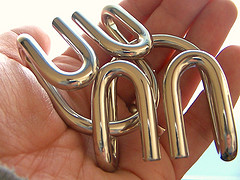
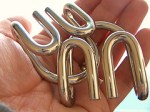
I’ve had this puzzle for almost a year.   It’s called the Devil’s Claw.  

You can get these at any Barnes and Noble and this one is rated “Challenging”.   The key is to get the darned thing apart into the two pieces.  I’ve tried.  My wife has tried, my daughter has tried,  my son had tried, my son’s friend has tried, unsuspecting party goers and holiday revelers have tried as I’ve begged many to just “ give it a go” and figure out a way to get the Devil’s claw apart.   

I like the puzzle.

It represents something too, this puzzle.  It must be defeated because well, it just has to be.  Hanayama, the company that makes the puzzle, specializes in recreating these puzzles from the 19th century and knows that there are thousands of people like you and me who need this type of challenge.     We tackle puzzles every day at work, but we sometimes want  more.  

At exactly 9:47 pm, I was sitting in the Man Cave (yep, I got one of those).   The Discovery channel was on (something about submarines), the laptop open and email up, a Bud Lite nearby too close to empty and as I was apt to have,  the Devil’s Claw was in my hands.

And……then…..

It came apart.  One piece in my left hand ….and one piece in my right hand. 

I was shocked.  I was thrilled.   And then, I was completely ticked off.   

I jumped to my feet.   Finally, after so much time had passed, I had defeated the Devil’s Claw.    The only problem was, as I began to head upstairs to exclaim to my wife that I had conquered the devil himself,  I realized that I had no idea how I did it.   I had taken it apart but had no idea how.  None. 

That was not good.  That was really not good.  That made me angry.  And then as I paused, it made me realize how often this happens.

I wanted to share how had succeeded.  I needed to share how I succeeded.  I actually needed to know how I did it.

When you succeed today at work, perhaps landing a colossal sale, are you absolutely sure how you did it?   Do you know exactly what steps you took, what process, what angles, what words, what perspective you took to make that success happen?

What exactly was the way in which you were able to take your Devil’s Claw apart?  When your colleagues, boss or spouse ask “How did you do it?”   Can you respond in a specific way?

You need to.  And often, too often, it isn’t easily explained.

Over the years, I have heard many success stories, so many difficult yet successful stories in which a sale was made, a solution solved, a customer indebted for life to you because of what you did.   And over the years, the how is often lost.

The how gets buried in the “It was magical, they ended up buying the whole suite!” or the “I just went with it” or the dreaded “because I’m a good salesperson.”  The how is forgotten.

Even the “I kept probing until I discovered” or “I wouldn’t take “no” for and answer” or the “I just knew we had what they needed” is akin to that playing mindlessly as I did with the Devil’s Claw in my lap and having it fall apart in my hands.

Success without knowing how, is not success, it is Random Achievement.  Random Achievement isn’t something you or I want.  What we want is success that we can understand and explain.  Success that is understood in minute detail is repeatable and wonderful.

Every manager, sales leader or marketer out there should be asking the questions of the successful salesperson about that successful sale and exactly what happened.   Don’t settle for the vague answers or the generalizations.  Salespeople who are successful may or may not be aware of how they accomplished the feat; (I know that years ago as a salesperson, it took me time before I was consciously aware of how I succeeded).  Your job as a leader is to delve deep into that space and “CSI” the event giving the salesperson and the respective populace the recipe for achieving this specific success. 

Random Achievement is great at the time, but it is no longer random when it falls identifiably upon people with some consistency.   The Devil’s Claw for me was a Random Achievement.   It did not have to be.  I’ve been working on that puzzle for nearly a year. 

Watch closely.  Watch how.   

I went to Barnes and Noble yesterday and got two more puzzles, both more difficult supposedly than the one I unknowingly conquered.  

The devil made me do it.   But this time, I’ll be watching. 

Till next time,

Grow The Business.

Mark

You Got Facts? So What?

Standard

It’s not the size of your knowledge that matters, it’s what you do with it that counts. 

You see, facts are getting less and less valuable every day.  They are just too easy to come by.

I saw two people sitting at a bar the other night playing that trivia game thing; you know the one you pump the quarters into and try and get the highest score.  One of them had an IPhone.    Fastest animal?  No problem, just Google it.  Superbowl X Champion?  That’s easy…Badda -Bing it.  Tallest skyscraper?…Yippy- Yahoo it.  

Game over.   That was fun.   Game means nothing now and so does your score.

Got a new video game for your kid?  Most 12 year olds go online, get the Cheatin’ facts and get the game codes.   Game over.   Good for you that you defeated Tyranna KingZilla, means nothing to me (and really to anybody else either).

Used to be that knowing a lot of facts nobody else knew actually meant something.  Meant you were smart.  Meant you had value.   Not anymore.

If you are the Keeper of the Knowledge, the Knower of All Things or the Encyclopedia of Vital Stuff, good for you except your days of being truly valuable are numbered.  

And that’s OK. 

Knowing facts or having knowledge all by itself had its day, but that was so yesterday.  

  • You’re a plumber who knows how to fix a leaky faucet.  So what? In a heartbeat I can go to ehow.com ( http://www.ehow.com/video_15854_fix-leaky-faucet.html ) and get all kinds of facts by watching a video on how to fix my faucet.  You’ll never get my call.
  • You’re a sales rep who knows every product, every process and every procedure ever created.  So what?  If you are up against someone who has great sales skills and a good search engine, you’ll get the steak knives and he’ll get the Cadillac.


It’s not about you knowing stuff no one else knows anymore.   Your customers and your competition can know pretty quickly what you know as far as facts go.  It’s about having the skills to do something with the facts.  The skills and applications and ability to seamlessly and proactively use facts to market better, to sell better, to strategize better and to differentiate you from just being a repository of those darn facts. 

That’s a good thing.

People and businesses that can do those kinds of things well will grow in value. 

So chill a bit about the facts (you can get those so much more easily now) and work on the skills.   That’ll make you stronger and nobody for a long time (maybe never) is going to say “so what?” to that.    

Till next time,

Grow The Business.

Mark